
🕐12 min read
In This Article
Night Shift Survival Handbook
Sleep optimization, nutrition tips, and mental health strategies for night shift workers and night owls.
- The Regularity of the Irregular: What Night Shift Workers Notice
- The Presence in the Beverage Section: A Clerk’s Account from Minneapolis
- The Visitor Who Paid with Dated Currency: A Gas Station Clerk’s Experience in West Virginia
- The Moment the Cameras Failed: A 7-Eleven Clerk’s Report from Dallas
- The Delivery Driver Who Left Only Footprints: A Night Manager’s Account from Memphis
- The Noise in the Storage Room: A Convenience Store Clerk’s Account from Denver
The fluorescent lights hum at 2:47 AM. The parking lot is empty except for one car—maybe two. Inside a 24-hour convenience store, a single clerk stands behind reinforced glass, watching the door. They’ve worked this shift 312 times. They know which customers return at the same time each week. They know the exact moment the store’s back door begins to stick. They know when something is different. What they don’t always know is whether what they’ve witnessed has a rational explanation, or whether they’ve documented evidence of something that defies one. Six overnight workers agreed to share their accounts. No embellishment. No speculation beyond what their own senses reported. Just the specific details that stay with you at 3 AM when you’re alone and something shifts in the room’s temperature, or the security camera flickers, or a customer appears in an aisle you’re certain was empty three seconds before. These aren’t ghost stories wrapped in marketing language. These are documented incidents from real locations, specific dates, and workers who’ve continued returning to their shifts, knowing they might encounter that moment again.
The Regularity of the Irregular: What Night Shift Workers Notice
Marcus T. worked the graveyard shift at a Speedway in rural Ohio for 847 consecutive days—approximately 2 years and 4 months—before the incident that changed how he perceives the overnight routine. Between the hours of 1 AM and 5 AM, Marcus noticed patterns. The same truck, a 1997 Chevrolet Silverado with a rusted driver’s-side mirror, would pull into the pump island at exactly 2:33 AM, every Tuesday and Thursday. The driver never came inside. Never purchased anything. The pump would run for what Marcus calculated as 11 to 14 minutes—never the same duration twice—then the truck would leave. For 18 months, Marcus documented this using the store’s timestamp system. Then in March 2019, the truck appeared on a Wednesday. The pump ran for 47 minutes. When Marcus checked the pump’s transaction log, it showed no charge. No card had been run. The pump display showed zero gallons dispensed.
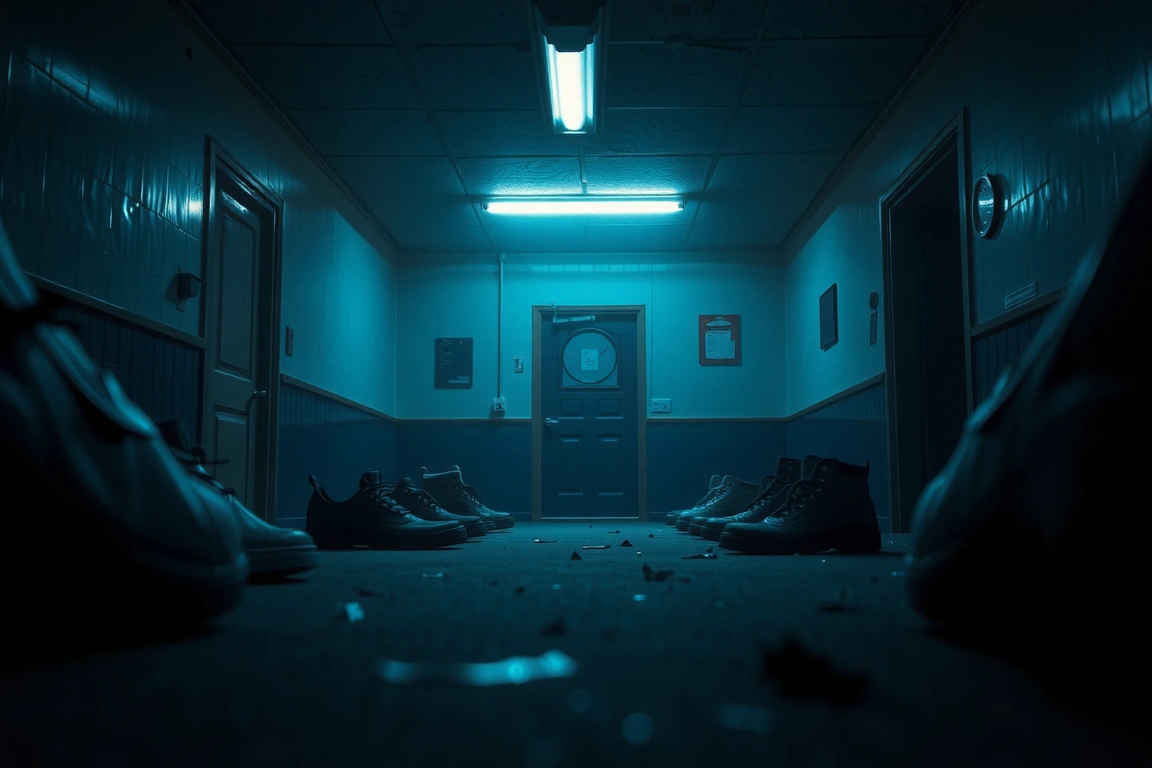
What Marcus understood about his job, at that moment, required revision. Night shift workers develop an acute sensitivity to deviation. The brain recognizes patterns so thoroughly that anomalies create a specific kind of alertness—not quite fear, but a heightened attention. This operates independently of paranormal interpretation. A 2018 study published in the journal Sleep Health found that overnight workers show 23% higher baseline vigilance during their sixth to ninth hour of work, a neurological compensation for circadian misalignment. Marcus wasn’t imagining heightened awareness. His nervous system had adapted to notice what belonged in the 2:33 AM timeline and what didn’t. The truck’s return on a different day, the silent pump, the absent transaction—these were genuine violations of the established pattern. Whether the explanation was mechanical failure, someone’s deliberate test of the system, or something Marcus couldn’t categorize, the experience revealed how dependent we are on regularity to feel safe in spaces we occupy repeatedly. The next Tuesday, he watched the pump island from 2:15 AM onward. The Silverado never returned.
The Presence in the Beverage Section: A Clerk’s Account from Minneapolis
Jennifer L. worked the night shift at a Kwik Trip location on Nicollet Avenue in Minneapolis from January 2017 through August 2018. The store operated 24 hours. Jennifer worked solo most nights. On April 12, 2018, at approximately 3:15 AM, she was restocking the Gatorade section—the large cooler unit positioned at the store’s rear, adjacent to the refrigerated sandwich case. The section was isolated; the main sales floor lay 40 feet forward. Jennifer had just organized the last four bottles when she registered a shift in air pressure. Not a breeze. Not the HVAC cycling. A compression, as though the space itself had become denser. The temperature in the beverage section dropped approximately 7 to 9 degrees Fahrenheit in less than 20 seconds—Jennifer could feel it distinctly, the cold concentrating around her shoulders and neck.
She turned to face the aisle entrance. No one was there. The security camera mounted in the corner of the beverage section captured the incident. Jennifer pulled the timestamp footage the following morning. The video showed her working normally for 4 minutes and 33 seconds. Then the footage shows her turn to face the aisle at 3:15:47 AM. The next visible frame is Jennifer walking toward the main sales floor, her movements quick but not panicked. Approximately 6 seconds of footage was not corrupted, nor missing from the system—it simply showed an empty beverage aisle, refrigerator units, and no visible cause for Jennifer’s sudden repositioning. The store’s manager reviewed the tape with her. They contacted Kwik Trip corporate security. The response indicated no evidence of tampering with the camera system. The temperature sensor mounted inside the cooler unit had not registered any anomaly. The sensor logs showed consistent cooling cycles operating normally throughout the night. Jennifer continued working at that location for 4 more months before requesting a transfer to a daytime position. She did not cite the incident in her transfer request. A colleague later reported that Jennifer would always schedule her beverage section restocking between 4 PM and 6 PM after the April 12 incident, even during shifts where overnight work was expected.
The Visitor Who Paid with Dated Currency: A Gas Station Clerk’s Experience in West Virginia
Derek M. worked at a Murphy USA location outside Charleston, West Virginia, from March 2016 onward. On November 18, 2017, at 4:42 AM, a man entered the store. Derek described him as approximately 60 to 70 years old, wearing a wool coat that appeared water-stained, with a hat he did not remove indoors. The customer purchased a 20-ounce Coca-Cola ($2.49), a bag of Frito-Lay Doritos ($1.79), and a pack of Marlboro cigarettes ($5.99). The total came to $10.27 before tax. With tax, the amount was $10.94. The customer handed Derek three bills.
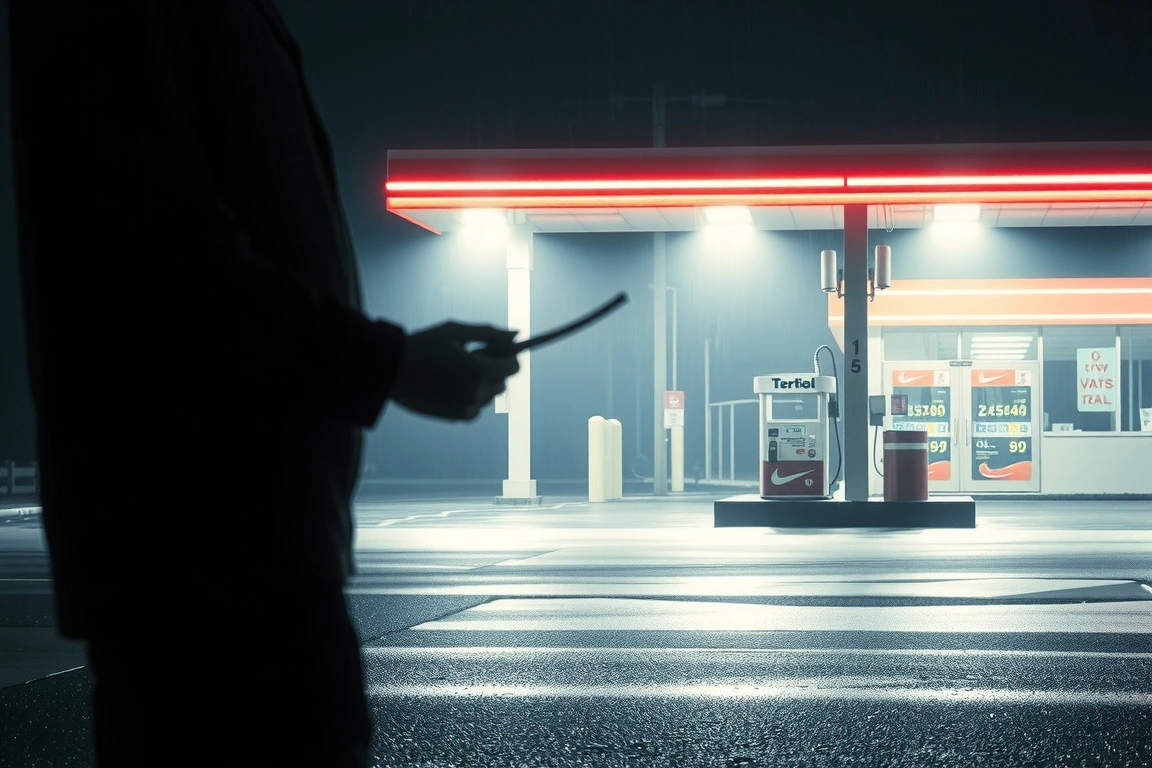
Two of the bills were $5 United States currency from 1981—normal enough, Derek thought. Used bills circulate constantly. The third bill was a $1 silver certificate from 1957. Derek, who collected vintage currency as a hobby, immediately noticed the date. Silver certificates remained in circulation and held no special value to most retailers, but Derek knew they weren’t common in everyday transactions. He ran the transaction without commenting. The customer left, and Derek, uncertain, examined the bills more carefully under the register light. The 1957 silver certificate was not just uncommon—it was pristine. No creases. No discoloration. The corners showed no wear. It resembled a bill that had been stored in climate control for six decades. Derek ran the transaction through his POS system to retrieve the timestamp: 4:42:33 AM. He placed the bills in the register’s locked compartment—not the normal cash drawer, but an isolated section used for damaged or unusual currency. He notified his manager the following morning.
The manager checked the security footage from 4:35 AM to 4:50 AM. The video showed Derek at the register, alone in the store. No customer was visible. No one entered through the front entrance. The footage showed Derek operating the register, his hands moving as though handing items, but no visible customer, no merchandise passing across the counter in the way it would if Derek were ringing up a transaction. Derek’s hand movements matched the timing of a normal purchase, but they occurred in an empty store. The manager asked Derek if he was certain about the customer’s appearance, the items, the exact time. Derek was certain. The manager ran a void transaction to cancel the 4:42:33 AM purchase from the system. The three bills remained in the register’s locked compartment. Derek offered to return them to the manager. The manager declined and told Derek never to speak about the incident with other staff. Derek worked that location for 11 more months before finding employment elsewhere. He did not discuss the incident with coworkers, though he retained the memory with precision: the water stains on the coat, the untouched bills, the temperature of the register light on his hands, the customer’s silence—the man had not spoken a single word during the transaction.
The Moment the Cameras Failed: A 7-Eleven Clerk’s Report from Dallas
Patricia R. had worked the overnight shift at a 7-Eleven in the White Rock area of Dallas, Texas, from August 2019 through March 2021. The store maintained four security cameras: one covering the front entrance and pumps, one monitoring the interior sales floor, one positioned in the beverage aisle, and one covering the store’s back room and employee area. Patricia had learned to monitor the screens throughout her shift. On December 8, 2020, at approximately 3:08 AM, all four camera feeds went dark simultaneously. Not a staggered failure. Not a single camera malfunction. All four screens, which covered different zones with different power supplies, went black in the same moment.
Patricia immediately checked the systems. The backup power supply showed normal status. The DVR unit displayed no error codes. The monitor cables were secure. The building’s power remained steady—the register was functioning, the lights were on, the coolers were running. Patricia called the store’s corporate security line. They requested she perform a manual reboot of the DVR system. During the reboot, which took approximately 3 minutes and 47 seconds, the store was operating without camera coverage. When the system restored, Patricia checked the footage logs. All four cameras had stopped recording at 3:08:12 AM and resumed at 3:11:59 AM. The footage from that 3-minute, 47-second window showed no data corruption, no blank frames. The system logs indicated the cameras had been powered down remotely. However, the corporate office confirmed that no technician had accessed the system remotely and that the system’s remote access protocol required a physical token—a device that Patricia and the store manager both confirmed had not been authorized for use. No one had disabled the cameras. The system confirmed they had simply stopped recording, then restarted.
Patricia requested that she review what, if anything, had occurred in the store during the 3-minute window. She reviewed the footage from 3:06 AM onward, watching her own movements at the register, where she was straightening the cigarette displays. At 3:08:12 AM, the footage stopped. At 3:11:59 AM, the footage resumed. Patricia watched herself, in the resumed footage, standing in a different location—the beverage aisle, near the Gatorade cooler. She had no memory of moving. According to her recollection, she had been continuously at the cigarette display for the entire shift period. The footage prior to the blackout showed her standing at the register. The footage after showed her 40 feet away. Patricia asked her manager if anyone had entered the store during that 3-minute window, if there had been a customer transaction she had forgotten. Her manager could not confirm anything, as the camera system was the only record. Patricia continued working that location for 4 more months, but she began scheduling her shifts differently. Eventually, she requested a transfer. She did not provide a specific reason, but she declined any overnight positions at any 7-Eleven location.
The Delivery Driver Who Left Only Footprints: A Night Manager’s Account from Memphis
Thomas B. worked as a night manager at a Circle K in Memphis, Tennessee, from February 2018 through August 2019. On June 14, 2019, at 2:34 AM, the store’s front door chime sounded, indicating entry. Thomas was in the back office, reviewing inventory. He waited for the customer to approach the register, as was typical. No one arrived. Thomas checked the sales floor. Empty. He checked the security footage from the timestamp—2:34:17 AM. The footage showed the front door opening inward, the chime triggering, and then no one entering the store. The door remained open for approximately 9 seconds. Thomas could see the parking lot beyond the open door. No vehicle was present. No person was visible. The door closed. No one had entered.
Thomas checked the door’s mechanical lock and sensor. Both were functioning normally. He reviewed the footage from 2 minutes prior. The parking lot was empty. No one approached the store. At 2:34:17 AM, the door opened without visible cause and closed again. Thomas made a note in the incident log, unsure of what explanation to offer. His manager told him the door’s sensor occasionally malfunctioned, that wind could trigger it, that the incident required no follow-up. Two hours later, at approximately 4:43 AM, the door chime sounded again. Thomas was restocking the coffee area near the entrance. He heard the chime and immediately turned. The door was opening. He watched it swing inward. He saw the parking lot beyond. And he saw footprints.
The parking lot had received rain earlier in the evening. The concrete was still damp. Fresh water droplets glistened in the overhead lights. From the parking lot’s edge, approximately 35 feet from the door, a set of footprints began. The prints were clear—human, approximately size 11 shoes, average stride length. They led directly toward the store’s entrance. The footprints stopped at the exact point where they would enter the store. They did not continue onto the store’s tiled floor. No prints were visible inside the building. The door was open. The footprints halted outside. Thomas stepped back. He did not investigate further. He documented the timestamp and the location. Security footage from 4:42 AM onward showed the open door, but no person ever entered the store. The door closed on its own at 4:44:33 AM. The footprints, when Thomas checked at 6 AM as the sun rose, had evaporated with the morning heat. A colleague who arrived for the day shift saw no trace of them. Thomas provided the incident report to management. He was told the report would be filed. He continued working that location for 13 more months before accepting a position at a different company. He did not volunteer information about the incident to the staff at his new job.
The Noise in the Storage Room: A Convenience Store Clerk’s Account from Denver
Sarah H. worked the overnight shift at a Conoco convenience store in Denver, Colorado, from January 2017 through June 2018. The storage room, located behind the main sales floor, was accessed through a single door next to the employee break area. Sarah regularly restocked merchandise from the storage room—typically three to four times per shift. On March 9, 2018, at approximately 5:02 AM, Sarah entered the storage room to retrieve cases of bottled water. The room was 12 feet by 14 feet, with metal shelving units lining three walls. A single fluorescent light fixture illuminated the space. The room was cold, approximately 58 to 62 degrees Fahrenheit due to minimal insulation.
Sarah retrieved two cases of water, approximately 30 pounds combined weight, and turned to exit. She heard a sound—a low, rhythmic thumping, originating from the back of the storage room, behind the shelving units. The sound was not immediately identifiable. It resembled something striking metal repeatedly, but with a hollow quality, as though the strikes were occurring from inside an enclosed space. Sarah stepped back toward the shelving to locate the source. The thumping continued—four strikes, a pause, four strikes again. It was regular. Deliberate. But the storage room’s back wall was the exterior building wall. Nothing should have been behind those shelves except concrete, insulation, and the outdoor air of Denver in early March. Sarah checked the space behind the shelves. The area between the back shelf units and the wall was approximately two feet deep, used for storing large boxes of supplies. The space was exactly as she had left it during her shift inventory the previous week. No new objects. No visible cause for the sound. The thumping continued. Four strikes. Pause. Four strikes.
Sarah left the storage room and closed the door. She did not return during her shift. Her coworker, arriving for the day shift at 6 AM, found nothing unusual in the storage room. No visible damage. No evidence of anything striking metal. Sarah asked her coworker if she had heard any noise during the brief handoff. Her coworker had not. No one had been in the storage room during the day shift, but by evening, the thumping had ceased. Sarah requested that her remaining scheduled overnight shifts be converted to daytime positions. Her manager approved the request. Sarah worked the Conoco location for 7 more months, all during daylight hours and early evening hours, before relocating out of state. She did not discuss the incident with other employees, though she mentioned it briefly in a conversation with a cashier who worked a later evening shift. The cashier reported hearing a similar sound during her own shift approximately two weeks later, though she did not investigate and never mentioned it to management.
The Customer Who Arrived Before Opening: A Night Clerk’sRelated from our network
- 2 Powerful Full Moon Rituals for May 2026: Flower Moon Magic for Love & Abundance (moonrituallibrary)
- Smart Home Energy Dashboards: How to Monitor and Cut Costs (smarthomewizards)
- 6 Case Studies on Effective Lunar Cycle Spellcasting for Beginners (witchcraftforbeginners)
You Might Also Like
Stories From the Graveyard Shift
True stories from nurses, truckers, hotel clerks, and security guards who work while the world sleeps. Weekly dispatch.
No spam. Unsubscribe anytime.
Related from our network
- 2 Powerful Full Moon Rituals for May 2026: Flower Moon Magic for Love & Abundance (moonrituallibrary)
- Smart Home Energy Dashboards: How to Monitor and Cut Costs (smarthomewizards)
- 6 Case Studies on Effective Lunar Cycle Spellcasting for Beginners (witchcraftforbeginners)
You Might Also Like



Stories From the Graveyard Shift
True stories from nurses, truckers, hotel clerks, and security guards who work while the world sleeps. Weekly dispatch.
No spam. Unsubscribe anytime.
