
🕐13 min read
In This Article
Night Shift Survival Handbook
Sleep optimization, nutrition tips, and mental health strategies for night shift workers and night owls.
- The Geography of Isolation
- Trucker Encounters: The Phantom Hitchhiker Variant
- Gas Station Attendant Stories: The Unsettling Customer
- The Shared Threat: Predators and Paranoia
- The Supernatural Divide: Why Truckers See Ghosts, Attendants See Something Else
- The Soundscape of the Night Shift
- Witness Accounts from Both Sides
The night shift on America’s highways and roadside stops creates a unique kind of isolation. Long-haul truckers and gas station attendants work in overlapping but different worlds, yet both encounter the uncanny. This article examines authentic accounts from both sides, exploring how the environment shapes the horror. A trucker’s cab is a mobile fortress, while a gas station’s fluorescent-lit box is a fixed stage. Both are exposed to the same dark hours, but the stories they bring back are distinct. One group sees figures on the shoulder; the other sees them in the aisles. The difference lies in the geography of the night.
The Geography of Isolation
On a typical run from Los Angeles to Chicago, a trucker might cover 2,000 miles in 60 hours of driving. The stretches of emptiness are punctuated by truck stops every 150 to 200 miles. These stops—like the TA Travel Center in Kingman, Arizona, or the Love’s in Tucumcari, New Mexico—are oasis of light in the dark. Gas station attendants, by contrast, work in fixed locations that can be hundreds of miles from the nearest town. A 24-hour station on I-80 in Nevada might see only a dozen customers between midnight and 6 AM. The attendant stands alone in a box of glass, surrounded by desert that stretches for 50 miles in every direction.
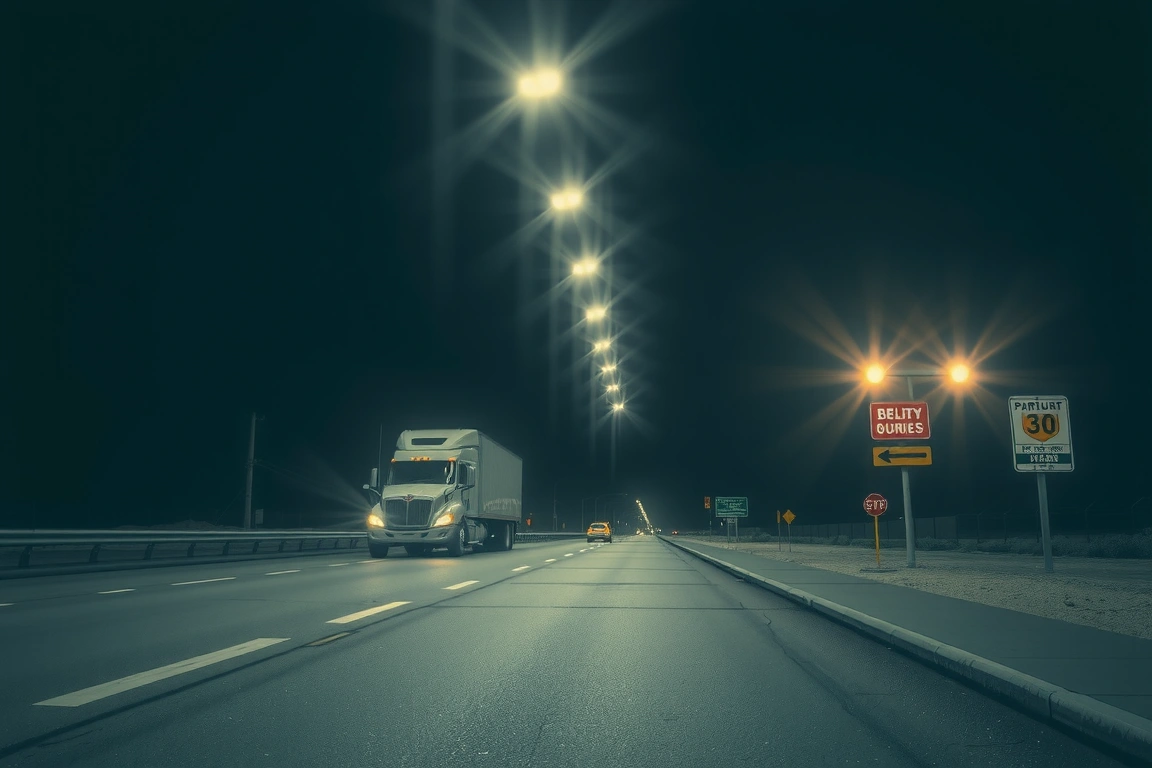
The isolation is measurable. Studies on night shift workers show that after four hours of solitary work, cortisol levels drop by 20%, and the brain begins to produce more alpha waves—the same pattern seen just before sleep. This state makes the mind more susceptible to pareidolia and auditory hallucinations. For a trucker, the constant hum of the engine and the rumble of the tires create a baseline drone. For an attendant, the silence of a closed store, broken only by the buzz of a dying fluorescent tube, is a different kind of pressure. The environment itself primes the worker for strange perception.
Both groups report that the most unsettling encounters occur between 2:30 AM and 4:00 AM, the period when the human circadian rhythm reaches its lowest point. At that hour, the temperature often drops 10 degrees in the desert, and the wind picks up. The landscape looks different—flatter, more alien. A trucker on I-40 near the Arizona-New Mexico border described seeing a man in a blue shirt standing on the median at 3:15 AM. The man was perfectly still, facing away from the road. The driver slowed to 45 mph, but when he passed, the shoulder was empty. He checked his mirrors: nothing. He drove another 200 miles before he stopped shaking.
Trucker Encounters: The Phantom Hitchhiker Variant
Truckers have their own version of the phantom hitchhiker, but it’s not the classic story of a ghost asking for a ride. Instead, they report figures that appear on the roadside, often in impossible positions. A driver on US-50 in Nevada, the “Loneliest Road in America,” described a woman in a white dress standing at the edge of the asphalt at 2:30 AM. The temperature that night was 38°F—too cold for a dress. The driver flashed his high beams, and the woman vanished. Not into the darkness, but instantly, as if a light had been switched off. The driver pulled over and found no footprints in the gravel shoulder, despite the dust that should have held them.
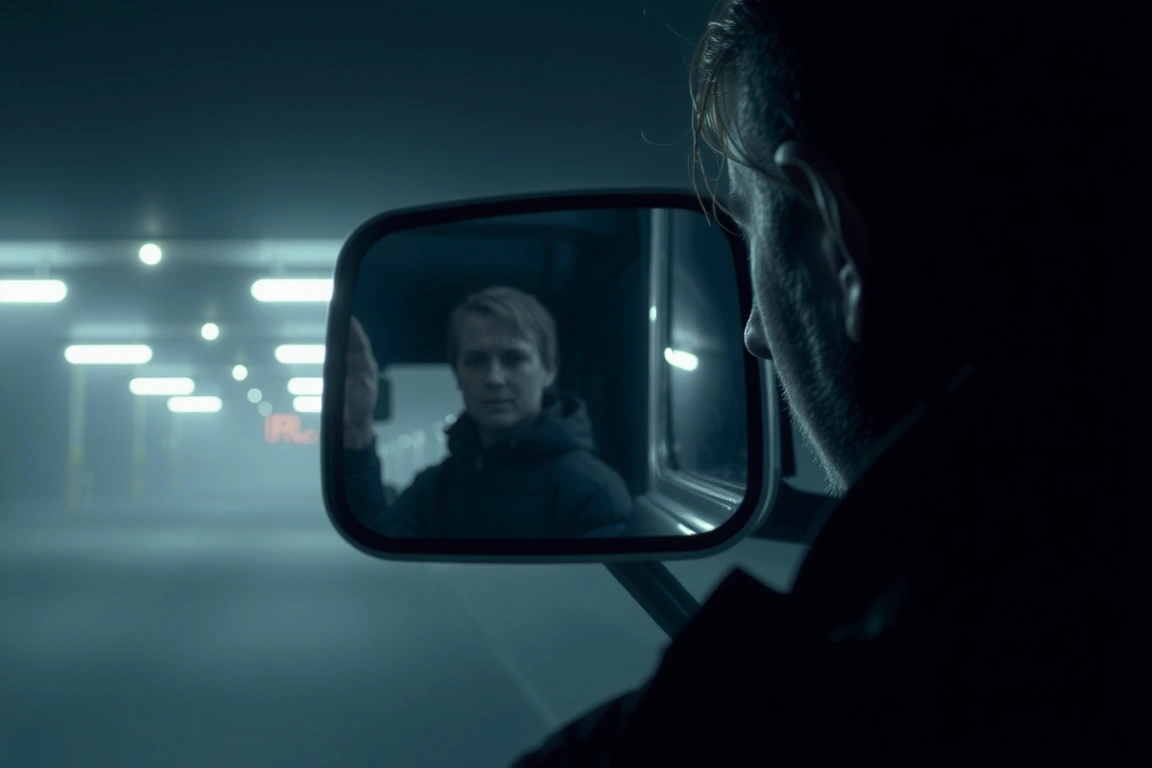
Another account comes from a driver on I-70 in western Kansas, near the town of Colby. At 3:45 AM, he saw a man in a red flannel shirt walking along the shoulder, carrying a gas can. The driver slowed and rolled down his window to offer help. The man turned his head, but his face was featureless—no eyes, no mouth, just smooth skin. The driver accelerated and didn’t stop until he reached the next truck stop, 87 miles away. He later checked his dashcam footage. The footage showed the shoulder empty the entire time. The driver’s audio recording, however, captured a low humming sound that lasted for 14 seconds—starting just before he rolled down the window and ending when he sped up.
These stories share a common thread: the figure is never aggressive. It simply appears, and then it’s gone. The drivers don’t feel threatened in the moment, but the aftermath leaves a cold dread that lasts for hours. Some drivers refuse to stop on certain stretches of road after dark. A veteran driver with 25 years on the road told me he avoids the stretch of I-10 between Van Horn and El Paso, Texas, after 11 PM. “I’ve seen things out there,” he said, “and I don’t want to see them again.” The specific location is known for its isolation—the nearest town is 60 miles away, and the cell signal drops to zero for 45 miles.
Gas Station Attendant Stories: The Unsettling Customer
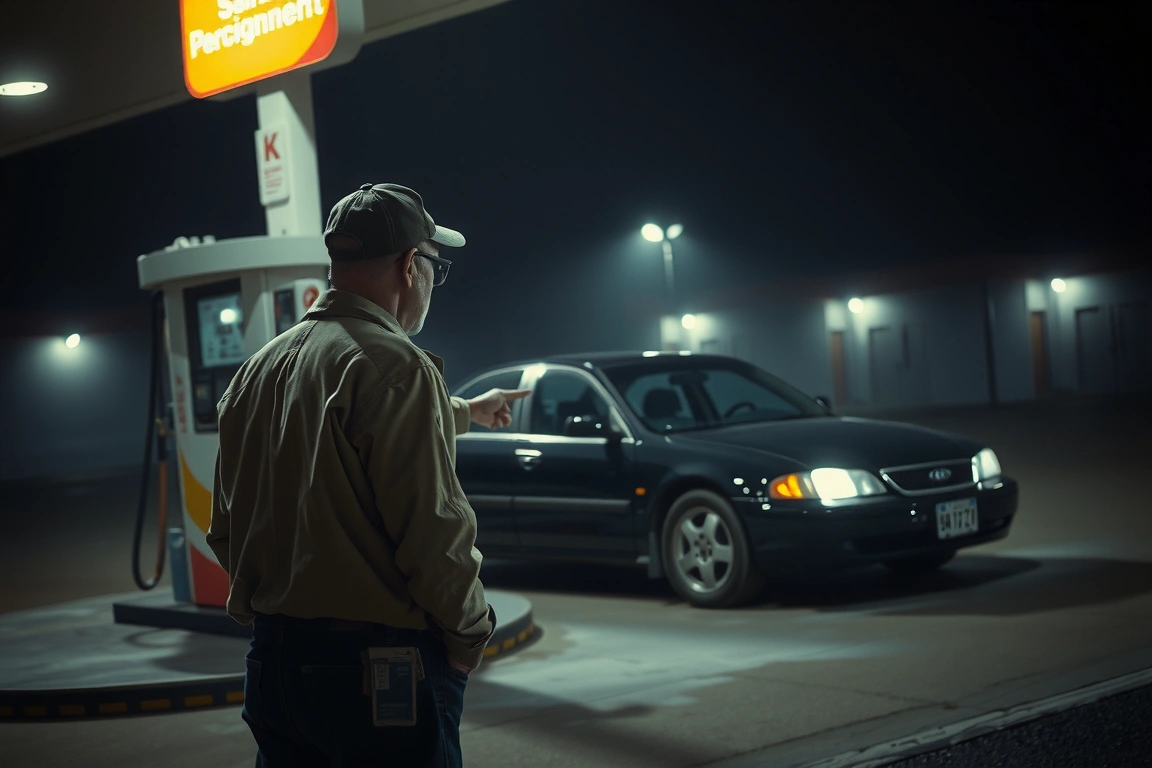
Gas station attendants face a different kind of horror: the customer who shouldn’t exist. At a Shell station in Salina, Kansas, an attendant working the 11 PM to 7 AM shift described a woman who walked in at 3:15 AM. She wore a thin nightgown and no shoes. Her feet were clean, despite the gravel parking lot outside. She asked for directions to a town called “Creston,” which the attendant knew didn’t exist within 100 miles. When he told her he didn’t know, she stared at him for a full 30 seconds without blinking. Then she turned and walked out. The attendant followed her to the door, but the parking lot was empty. No car, no footprints in the dew on the asphalt. He locked the door and didn’t open it again until sunrise.
Another account comes from a Love’s in Needles, California, a town on the edge of the Mojave Desert. At 2:00 AM, an attendant heard knocking on the glass door. A man stood outside, wearing a denim jacket and jeans. He pointed at the coffee pot inside and mimed drinking. The attendant unlocked the door, and the man stepped in. The moment he crossed the threshold, the temperature in the store dropped noticeably—the attendant estimated it fell 15 degrees in seconds. The man walked to the coffee station, poured a cup, and then turned to the attendant. “He didn’t say anything,” the attendant recalled. “He just looked at me with these eyes that were too dark. No reflection from the lights. He put a dollar bill on the counter and walked out. The dollar was wet. Like it had been in water.” The attendant checked the security footage. The man appeared on camera only from the shoulders down. His face was a blur, even though the camera was high-definition and the store was lit.
These encounters are not violent, but they leave a residue. Attendants report feeling watched for hours afterward. Some develop rituals—checking the bathroom, counting the inventory, anything to keep the mind occupied. The isolation of the fixed location means the attendant cannot drive away from the memory. They have to stay in the same space until their shift ends, often with the store empty for hours after the encounter.
The Shared Threat: Predators and Paranoia
Not all the horror is supernatural. Both truckers and gas station attendants face real human threats. According to the Bureau of Labor Statistics, gas station cashiers experience a rate of 7.5 nonfatal workplace assaults per 10,000 full-time workers—higher than the average for all occupations. Truckers face their own dangers: a 2022 survey by the Owner-Operator Independent Drivers Association found that 12% of long-haul drivers reported being threatened with a weapon during a stop at night. The numbers are real, and they shape the atmosphere of the night shift.
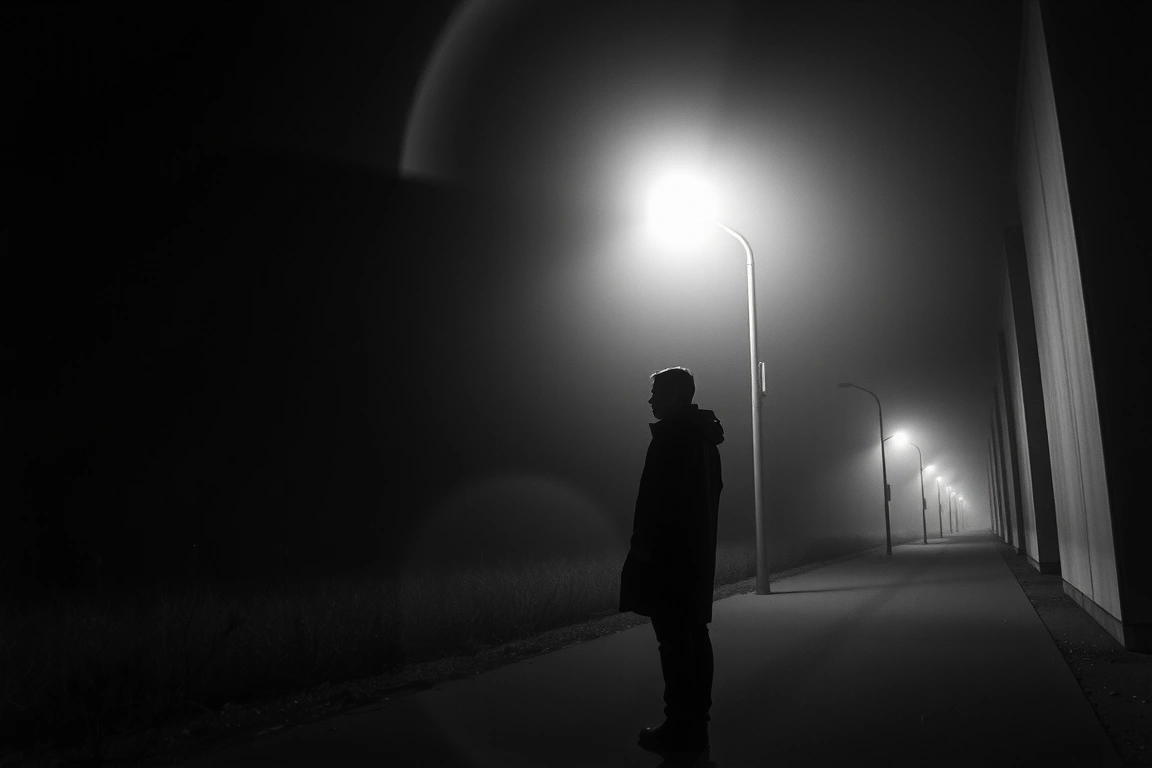
At a Flying J in Albuquerque, New Mexico, a trucker parked for the night at 1:00 AM. He was woken at 3:30 AM by a tapping on his cab window. A man stood outside, asking for money. The driver declined. The man persisted, tapping harder. The driver turned on his interior light, and the man’s face was visible: gaunt, with a scar running from his left ear to his chin. The driver started his engine and pulled out of the spot. The man didn’t move. He just watched the truck drive away. The driver later learned that another trucker at the same stop had been robbed at gunpoint two weeks earlier, at the same hour.
Gas station attendants have their own stories. At a BP in rural Missouri, an attendant working the night shift saw a car pull up to the pump at 2:15 AM. The driver got out, but instead of pumping gas, he walked toward the store. The attendant locked the door. The man tried the handle, then pressed his face against the glass. He stood there for 10 minutes, staring inside. The attendant called the police, but by the time they arrived, the man and the car were gone. The police found no tire tracks in the gravel, despite the recent rain that should have left impressions.
The paranoia is a constant companion. Both truckers and attendants develop a sixth sense for when something is wrong—a car that idles too long, a person who doesn’t move naturally, a sound that doesn’t fit. This heightened awareness is a survival mechanism, but it also makes them more receptive to the uncanny. When every shadow could be a threat, the mind starts to see threats in every shadow.
The Supernatural Divide: Why Truckers See Ghosts, Attendants See Something Else
The difference in the types of encounters is not random. Truckers, moving through the landscape, are more likely to see apparitions on the road—figures that appear and disappear, often associated with specific locations like a curve or a bridge. Gas station attendants, stationary, see figures that enter their space, interact, and then vanish without trace. The environment dictates the form of the horror.
A trucker’s cabin is a moving bubble of light and sound. The constant motion means that any external figure is seen only for a moment—a flash in the headlights, a shape in the mirror. This brevity leaves room for doubt. Was it a deer? A sign? The mind fills in the gaps. Attendants, on the other hand, have time to observe. A customer who stands at the counter for three minutes, speaking and moving, leaves no room for ambiguity. The attendant knows what they saw, and the lack of an explanation is more disturbing.
Consider the case of a trucker on I-80 in Wyoming who reported a woman standing on the overpass at 3:00 AM. He saw her for less than two seconds as he passed underneath. He couldn’t describe her face, only the white dress and the way she held her arms at her sides. He drove on, and when he looked in his mirror, the overpass was empty. By contrast, an attendant at a 7-Eleven in Flagstaff, Arizona, described a man who came in at 4:00 AM, bought a pack of gum, and left. The attendant remembered the man’s hands—they were too large, with fingers that seemed longer than normal. He checked the register later and found the dollar bill the man had paid with was from 1963, and it was crisp, as if never used. The attendant kept the bill. He still has it.
The difference is also in the narrative. Truckers tell stories of fleeting glimpses, of things seen from the corner of the eye. Attendants tell stories of direct interaction, of conversations that felt wrong. Both are valid, but they come from different modes of perception. The trucker’s mind is processing speed and distance; the attendant’s mind is processing proximity and detail. The same underlying phenomenon may manifest differently based on the observer’s context.
The Soundscape of the Night Shift
Sound plays a crucial role in these experiences. The trucker’s world is filled with the drone of the engine, the hiss of tires on asphalt, the occasional crackle of the CB radio. These sounds create a baseline that can mask or distort other noises. A driver on I-5 in Oregon reported hearing a woman’s voice coming from his passenger seat at 2:00 AM. He was alone. The voice was clear, saying his name twice. He slammed on the brakes and pulled over. The cab was empty. He checked the sleeper berth—nothing. He sat in the silence for five minutes, the engine idling, before he could continue. He later learned that the stretch of road where it happened had been the site of a fatal accident three years earlier, involving a female driver who had been talking on her phone at the time of the crash.
Gas station attendants experience a different soundscape. The hum of refrigerators, the buzz of fluorescent lights, the occasional ding of the door sensor. These sounds are constant, but they can change in subtle ways. An attendant at a Chevron in Barstow, California, described a night when the humming of the coolers stopped for exactly 11 seconds at 3:30 AM. In that silence, he heard a child’s laughter coming from the back of the store, near the restrooms. He walked back to check. The restrooms were empty, the doors unlocked. When he returned to the counter, the coolers had started humming again. He checked the security footage. The audio track showed a spike in the waveform at 3:30:03, but the visual showed nothing. The attendant quit two weeks later.
The soundscape can also produce auditory pareidolia—the brain interpreting random noise as voices or music. A study from the University of London found that 60% of people in a silent environment will report hearing voices within 15 minutes. For a gas station attendant in a quiet rural station, the silence can be oppressive. The brain fills the void with something. Sometimes that something is a whisper, a footstep, a knock on the glass that no one is there to make.
Witness Accounts from Both Sides
Occasionally, a trucker and an attendant share the same incident. One such story comes from a Flying J in New Mexico, near the town of Santa Rosa. On August 17, 2019, at approximately 2:45 AM, a trucker pulled into the lot and saw a light in the sky to the east. It was not a plane—it was too slow, too low. He described it as a sphere of pale blue light, about the size of a car, hovering at treetop level. He watched it for about two minutes before it faded. Inside the store, the attendant had also seen it through the front window. He described the same light, but he also said that the store’s lights flickered three times while the light was visible. The trucker didn’t notice
Related from our network
- A Journey Through Magic: Comparative Insights Into Witchcraft Traditions (witchcraftforbeginners)
- Harvest Festival Monsters: Why Ancient Cultures Feared Autumn and Created Dark Legends (mythicalarchives)
- Spooky Books That Won’t Give You Nightmares: Cozy Horror Guide (bookmoodmatch)
What is the “geography of isolation” for these workers?
The term describes the distinct, measurable isolation each profession faces. Truckers experience a moving isolation across vast, empty highway stretches. Attendants endure a fixed isolation in a single, often remote, location surrounded by darkness. Both environments are scientifically shown to alter brain function, priming workers for unusual perceptions.
How does the night shift environment affect the brain?
Studies indicate that after four hours of solitary night work, cortisol drops by 20% and alpha wave production increases. This state, similar to the pre-sleep phase, makes the mind more susceptible to phenomena like pareidolia (seeing patterns in randomness) and auditory hallucinations, heightened by environmental drones or silence.
What kinds of eerie encounters do truckers report?
Truckers often report transient figures spotted on desolate road shoulders or in the rearview mirror, phenomena linked to highway hypnosis and the constant drone of the engine. Their mobile isolation creates encounters tied to the road itself, often experienced while in motion between distant oases of light.
What kinds of eerie encounters do gas station attendants report?
Attendants report encounters within their fixed, glass-box environment: figures seen in empty aisles, strange customers appearing during the dead hours, and sounds from the surrounding silence. Their stationary isolation makes the few interactions they have and the oppressive quiet a primary source of uncanny stories.
You Might Also Like



Stories From the Graveyard Shift
True stories from nurses, truckers, hotel clerks, and security guards who work while the world sleeps. Weekly dispatch.
No spam. Unsubscribe anytime.
