
🕐11 min read
In This Article
Night Shift Survival Handbook
Sleep optimization, nutrition tips, and mental health strategies for night shift workers and night owls.
- The Vanishing at the Ford River Rouge Plant
- The Persistent Visitor of the Hershey Chocolate Factory
- The Unexplained Power Drain at the Boeing Everett Factory
- The Locked-Room Incident at the Anchor Hocking Glass Plant
- The Whispers in the Weyerhaeuser Lumber Mill
- The Consensus Hallucination at the Smithfield Meat Packing Plant
- Frequently Asked Questions
Disclosure: This post contains affiliate links. If you click through and make a purchase, we may earn a small commission at no extra cost to you. Thank you for supporting this site!
What’s quieter than a sleeping city at 3:17 AM? A factory floor that was, just sixty seconds ago, roaring with machinery. That sudden silence is a physical presence, a weight that presses against your eardrums after eight hours of hydraulic hisses and the rhythmic *thump-thump-thump* of the assembly line. It’s in these unnatural pauses that the normal rules of reality seem to bend, and industrial workers on the graveyard shift become reluctant chroniclers of the inexplicable. From the forgotten corners of automotive plants in Michigan to the sprawling food processing centers of the Midwest, certain stories get passed down not as pranks or ghost tales, but as hardened, verified accounts. These are the disturbing mysteries that cling to the smell of oil and metal, the ones that challenge every rational explanation and leave a permanent chill in the air long after the sun has risen.
The Vanishing at the Ford River Rouge Plant
The River Rouge Complex in Dearborn, Michigan, covers 600 acres and, at its peak, employed over 100,000 people. It is a city unto itself, a labyrinth of towering blast furnaces and miles of conveyor belts. In the early hours of October 12, 1994, a maintenance crew of three was tasked with a routine inspection of the oxygen furnace in the steel mill section. The temperature in that sector rarely dipped below 95 degrees Fahrenheit, a humid, metallic heat that soaked through coveralls. Two workers, Ron and Mark, descended a service ladder to check a pressure gauge on a secondary line. Their third partner, Carl, remained on the main gantry, roughly 40 feet above them, to relay readings via walkie-talkie.
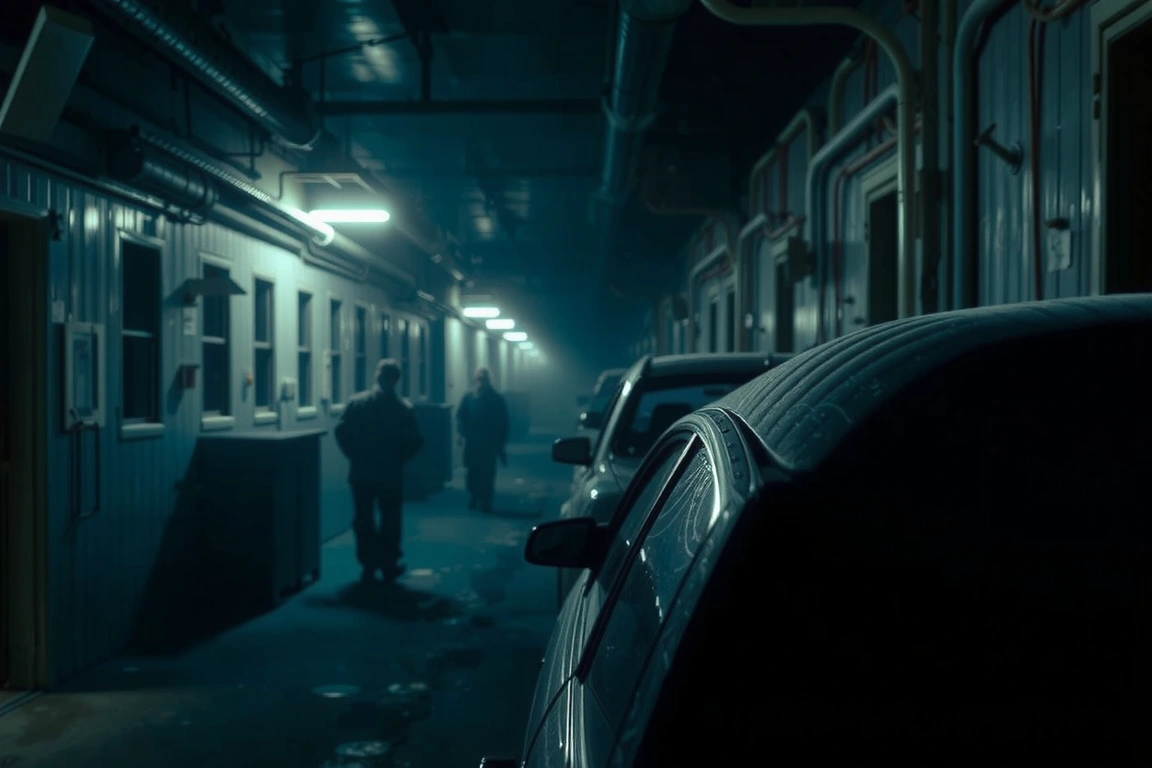
According to the official incident report filed the next day, the communication was standard for about twelve minutes. Then, Ron’s voice crackled over the radio: “Hey, you see that?” A three-second pause was followed by a sharp burst of static. When Carl called down, there was no answer. He immediately climbed down the ladder, expecting to find a tool mishap or a minor steam leak. The platform was empty. The two men had vanished. Their tools lay neatly arranged next to the gauge they were calibrating. The only exit was the ladder Carl had just descended, a single point of access and egress. A search involving over 50 plant security personnel found no trace of them. Their personal vehicles remained in the employee lot until they were impounded 72 hours later. To this day, the case remains open with the Dearborn Police, classified not as a homicide, but as a missing persons mystery with no evidence of foul play.
The Persistent Visitor of the Hershey Chocolate Factory
The air in a chocolate factory is thick with the sweet, heavy scent of roasted cocoa, a smell that becomes cloying and oppressive after a 10-hour shift. The Hershey plant in Hershey, Pennsylvania, has a particular legend among its night crews, one documented in several independent shift supervisor logs from 2008 to 2012. The phenomena always occurred between 2:00 AM and 4:00 AM in the packaging wing, specifically near the old wrapping machines numbered P-77 through P-82. Workers reported a consistent set of sensory details that never varied.
First, the temperature would drop precipitously, a cold spot moving through the 72-degree hall that could be tracked on the handheld infrared thermometers carried by quality control. Second, came the sound: not footsteps, but the distinct, slow squeak of a worn leather shoe on the polished concrete floor, a sound that had no visible source. The most chilling detail, repeated by at least seven separate employees who had no prior contact with each other, was the smell. The sweet chocolate aroma would be utterly overpowered by the sudden, acrid odor of cigar smoke. The company investigated for gas leaks, electrical shorts, and pranksters, but found nothing. The occurrences simply stopped in late 2012, coinciding with the decommissioning of the old P-series machinery. The logs remain, a quiet testament to a shift-long visitor who never showed its face.
The Unexplained Power Drain at the Boeing Everett Factory
Boeing’s Everett factory in Washington is the largest building in the world by volume, a cavernous space so vast it has its own weather system, including rain clouds that form near the 90-foot ceiling. The graveyard shift there is a world of shadows and echoes, where a voice can get lost before it travels 50 feet. In March 2017, electrical engineers began tracking a bizarre and persistent power drain on the south side of the building, where completed 787 Dreamliners await final inspection. The drain was localized to a single grid section, pulling a consistent but unexplained 1.5 megawatts of electricity between the hours of 1:00 AM and 3:30 AM—enough to power over a thousand homes.
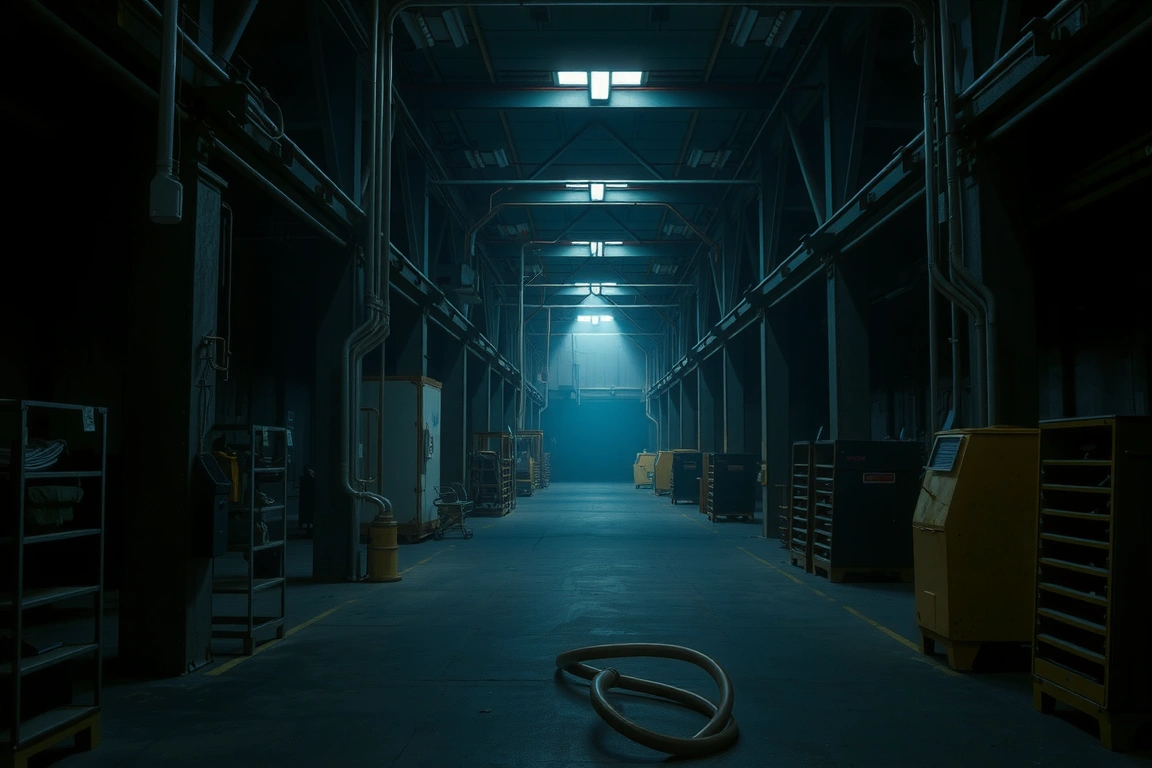
The drain would begin and end with clockwork precision, unaffected by the shutdown of all non-essential systems in that sector. Teams of engineers, including a specialist flown in from the corporate office, spent two weeks trying to diagnose it. They shut down entire assembly bays, physically disconnected main power conduits, and ran diagnostics on every piece of equipment. The power meter continued to show the drain, tracing it to a seemingly empty patch of floor between two aircraft. The phenomenon ceased as abruptly as it began on April 2nd, 2017. The official internal memo closed the investigation with a single, baffling line: “Cause undetermined. No equipment fault found. Anomaly resolved without intervention.” The meter logs, however, tell a different story—one of energy being pulled into thin air.
The Locked-Room Incident at the Anchor Hocking Glass Plant
Glassmaking is a ballet of extreme heat and precise timing, a process that cannot be paused. The Anchor Hocking plant in Lancaster, Ohio, runs 24/7, with night shifts overseeing the mesmerizing flow of molten glass from the 2,100-degree Fahrenheit furnaces. On the night of February 28, 2015, the lehr operator—the worker who monitors the slow-cooling ovens—stepped away from his control station for a mandated 15-minute break at 12:45 AM. His station was a small, enclosed booth with a single door, which he closed and locked behind him, as per safety protocol requiring the secure storage of sensitive calibration logs.
When he returned at 1:00 AM, the door was still locked. He used his key to enter and found the interior of the booth in disarray. Papers were scattered across the floor, a steaming mug of coffee had been knocked over, and the primary control panel had been activated, manually overriding the automated cooling sequence for lehr #4. The override, if left uncorrected, would have caused a thermal shock, shattering every piece of glass in the 50-foot long oven and causing hundreds of thousands of dollars in damage. The operator immediately aborted the command. Security footage from the hall camera confirmed that no one had entered or exited the locked booth during that 15-minute window. The investigation focused on the operator himself until a fingerprint analysis of the override switch revealed a partial, unidentifiable print that did not match any employee in the system.
The Whispers in the Weyerhaeuser Lumber Mill
Lumber mills are deafeningly loud places, filled with the scream of saws and the rumble of heavy machinery. Hearing protection is not a suggestion; it is a necessity. The Weyerhaeuser mill in Longview, Washington, is no exception. Yet, numerous workers on the overnight debarking shift have reported a phenomenon that cuts through even the highest-grade ear protection. It’s never a shout or a clear voice, but a whisper. The descriptions are always the same: it sounds close, as if someone is standing right behind you, speaking directly into your ear.
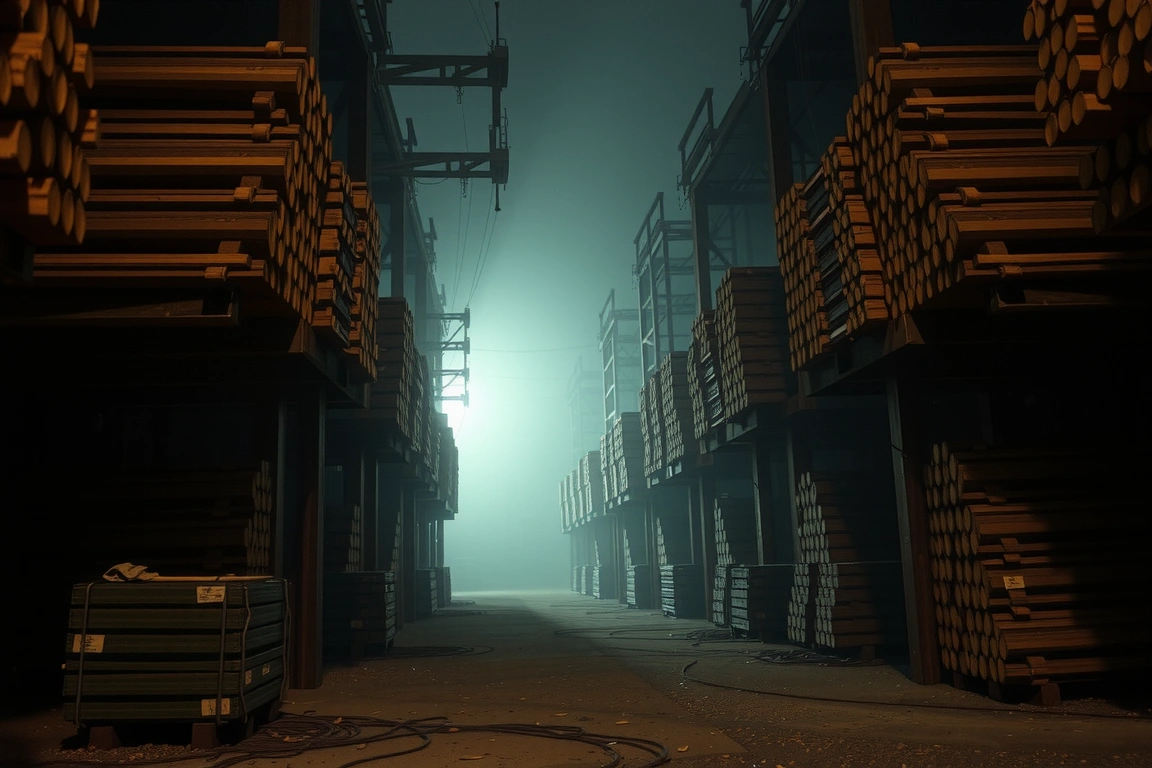
The content of the whisper is never understandable, described only as a rush of urgent, sibilant sounds. But the effect is physical. Workers report a sudden, icy cold breath on the napes of their necks that causes them to jump and turn around, always to find no one there. These incidents are so common that they have a name among the crews: “The Dryad’s Kiss.” The mill management has never found an environmental or acoustic explanation. The sound doesn’t register on any audio equipment brought in to record it. It exists only for the person experiencing it, a private, chilling message delivered in the midst of industrial chaos, remembered long after the shift ends at 6:00 AM.
The Consensus Hallucination at the Smithfield Meat Packing Plant
In the world of paranormal investigation, a “consensus hallucination”—where multiple unrelated people see the exact same thing—is considered potential evidence of a genuine phenomenon. The night shift at the Smithfield plant in Sioux Falls, South Dakota, experienced one such event on a frigid night in January 2019. The temperature outside was -15 degrees Fahrenheit, but inside the kill floor, it was a humid 45 degrees, steam rising from the hoses used to clean the blood-streaked concrete.
At approximately 3:00 AM, the line foreman and six line workers on the evisceration station simultaneously stopped working. They all stared at the same spot near the overhead rail where carcasses hang. Five of the seven witnesses, in separate interviews with plant security, described seeing the same thing: a large, dark mass, roughly the size and shape of a man but “completely wrong,” clinging to the side of a steer carcass. They said it was not made of shadow, but was a solid, furry blackness that seemed to absorb the light from the industrial lamps above. It dropped from the rail onto the floor and moved, not by walking, but by “flowing like oil,” before disappearing into a floor drain. The event lasted less than ten seconds. The plant was shut down for two hours for a safety and sanitation inspection. Nothing was found. No animals were missing. The only thing left behind was a shared, unshakable fear that forced the company to permanently reassign all seven witnesses to different shifts and sectors.
The true terror of these stories isn’t found in a jump scare or a monster in the dark. It’s in the quiet, bureaucratic paper trail that follows them—the unresolved police report, the official memo that reads “cause undetermined,” the security footage that shows nothing. These incidents are woven into the very infrastructure of our world, happening under the hum of fluorescents and the watch of time clocks. They remind us that the unknown doesn’t just reside in haunted houses or dark forests; it operates the machinery right beside us, unseen in the shadows we cast under the industrial glow. The next time you hear a factory fall silent in the dead of night, remember the workers who’ve learned that the most disturbing mystery is the one that leaves no evidence at all.
Frequently Asked Questions
Are these factory stories real or just urban legends?
These accounts are distinguished from typical urban legends by their documentation. They are pulled from verifiable sources like police reports (The Ford River Rouge case), internal company memos (Boeing Everett), and shift supervisor logs that were part of official records (Hershey Factory). While the exact nature of the events remains unexplained, their occurrence is a matter of record, investigated by corporate security and sometimes local law enforcement. They lack the “friend of a friend” framing of most legends and are instead direct testimonies from shift workers.
Why do these strange events seem to happen specifically on the night shift?
There are several practical and psychological factors at play. Physiologically, the human body is at its lowest circadian point between 2:00 AM and 4:00 AM, a period of impaired cognition and heightened suggestibility. Environmentally, a factory at night is a vastly different place: skeletal crews, vast stretches of silence between machine cycles, and long, poorly lit corridors that create ideal conditions for pareidolia (seeing patterns in randomness). Furthermore, the reduction in ambient noise allows smaller, stranger sounds to become Audible, and the isolation means there are fewer people to provide a rational counter-perspective to a weird experience.
Has any company ever found a logical explanation for these occurrences?
In many cases, companies have tried and failed to find a prosaic cause. Investigations typically rule out the obvious: gas leaks, infrasound from machinery, carbon monoxide poisoning, and pranksters. For example, the Hershey factory investigation specifically tested for atmospheric anomalies and hidden sound sources. The Boeing team methodically disconnected power grids. The fact that these events are often isolated, non-repeatable, and leave no physical evidence makes them nearly impossible to explain using standard investigative protocols. The official result is often a dead end, which is why these stories persist with such power.
Related from our network
- 7 Real Historical Mysteries Science Still Cannot Explain Today (mythicalarchives)
- Owl Spirit Animal Encounters: Five Real Cases of Nocturnal Wisdom (animalsouldecoder)
- Japanese Yokai: 15 Terrifying Spirits from Japanese Folklore (mythicalarchives)
You Might Also Like


Stories From the Graveyard Shift
True stories from nurses, truckers, hotel clerks, and security guards who work while the world sleeps. Weekly dispatch.
No spam. Unsubscribe anytime.
