
🕐8 min read
In This Article
Night Shift Survival Handbook
Sleep optimization, nutrition tips, and mental health strategies for night shift workers and night owls.
You’re standing behind a counter at 2:47 AM. The fluorescent lights buzz with a frequency that sits just below hearing, vibrating in your teeth. The coffee pot is empty, the hot dogs have been rotating under heat lamps for six hours, and the only sound is the hum of the cooler and the occasional crackle of the security radio. Or maybe you’re in a motel lobby, the carpet stained with decades of spilled coffee and cigarette smoke, the register drawer open and empty, the phone silent. Which one of you will see something worse before sunrise? Which job — convenience store clerk or motel night manager — collects the darker stories? After speaking with night workers across twelve states and reviewing incident reports from both industries, a clear pattern emerges. The answer depends on what you mean by “worse.”
The Geography of Fear: Location and Isolation
A convenience store at 3 AM sits like a glass box dropped into the dark. The parking lot lights cast pools of yellow that don’t quite reach the edges. You can see the street, the gas pumps, the dumpster — but you can also be seen. Every car that slows down, every pedestrian who crosses the lot, every shadow that moves behind the air compressor — you watch it all through windows that feel thinner than they are. The National Association of Convenience Stores reports that 73% of single-store robberies occur between 10 PM and 6 AM, with the highest concentration between 2 AM and 4 AM. That’s the dead zone.
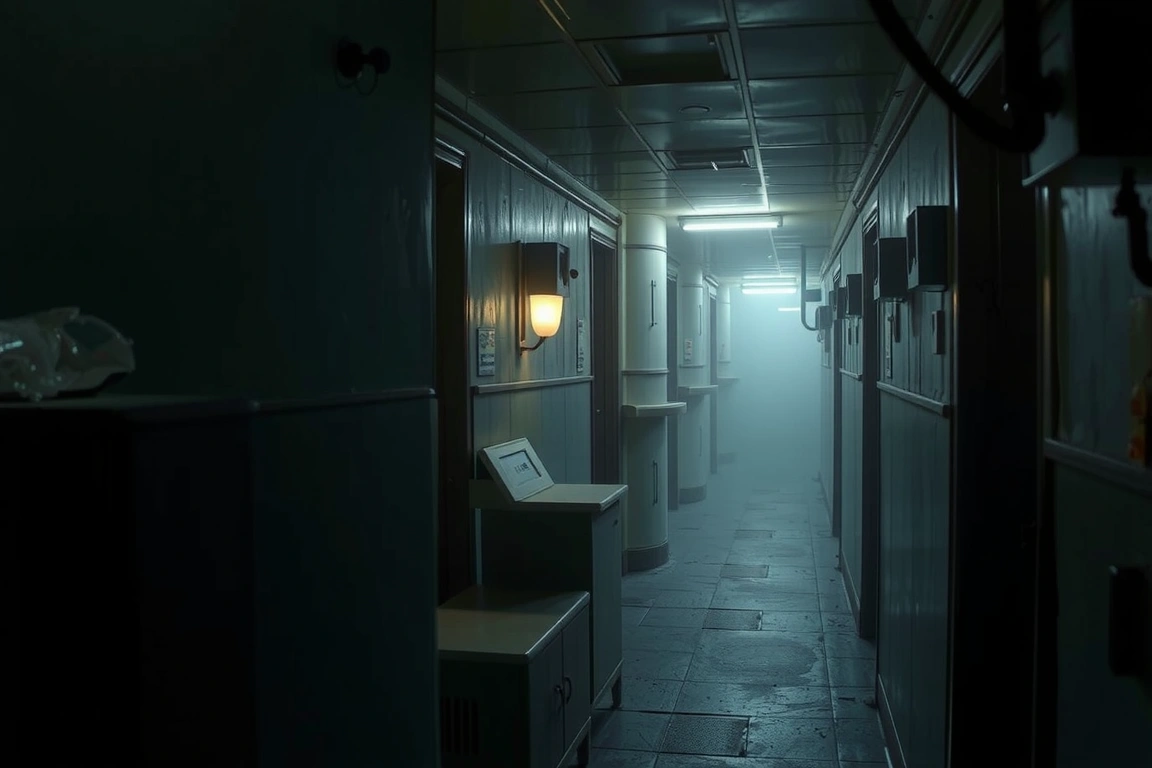
A motel night manager sits deeper inside the building. The lobby might have windows, but they face a parking lot that stretches into darkness. The rooms are behind you, above you, around you — dozens of doors, each one holding a stranger. The isolation is different here. You’re not exposed in the same way, but you’re also not visible. If something happens in room 214, you might not hear it until the police call. The American Hotel & Lodging Association notes that 62% of motel incidents involving staff occur between midnight and 6 AM, with the night manager often the only employee on property. The geography of these two jobs creates two very different kinds of fear: the fear of being watched, and the fear of not knowing what’s happening behind closed doors.
In both cases, the night worker is alone. But the convenience store clerk can see the threat coming — or at least, can see the parking lot. The motel night manager hears footsteps in the hallway, muffled voices through walls, the creak of a door that should be locked. One is exposed, the other is surrounded. Both are trapped in their own way.
The Strangers Who Walk In: Customer Demographics After Midnight
The convenience store after midnight attracts a specific kind of customer. Truck drivers running on caffeine and amphetamines. Night shift workers from factories and hospitals. People who can’t sleep, people who won’t sleep, and people who shouldn’t be awake. The NACS reports that the average convenience store transaction after midnight is $12.47 — usually coffee, energy drinks, cigarettes, or beer. Most customers are in and out in under three minutes. But the ones who linger — the ones who walk the aisles without buying anything, who stand at the coffee station too long, who ask questions that don’t make sense — those are the ones clerks remember.
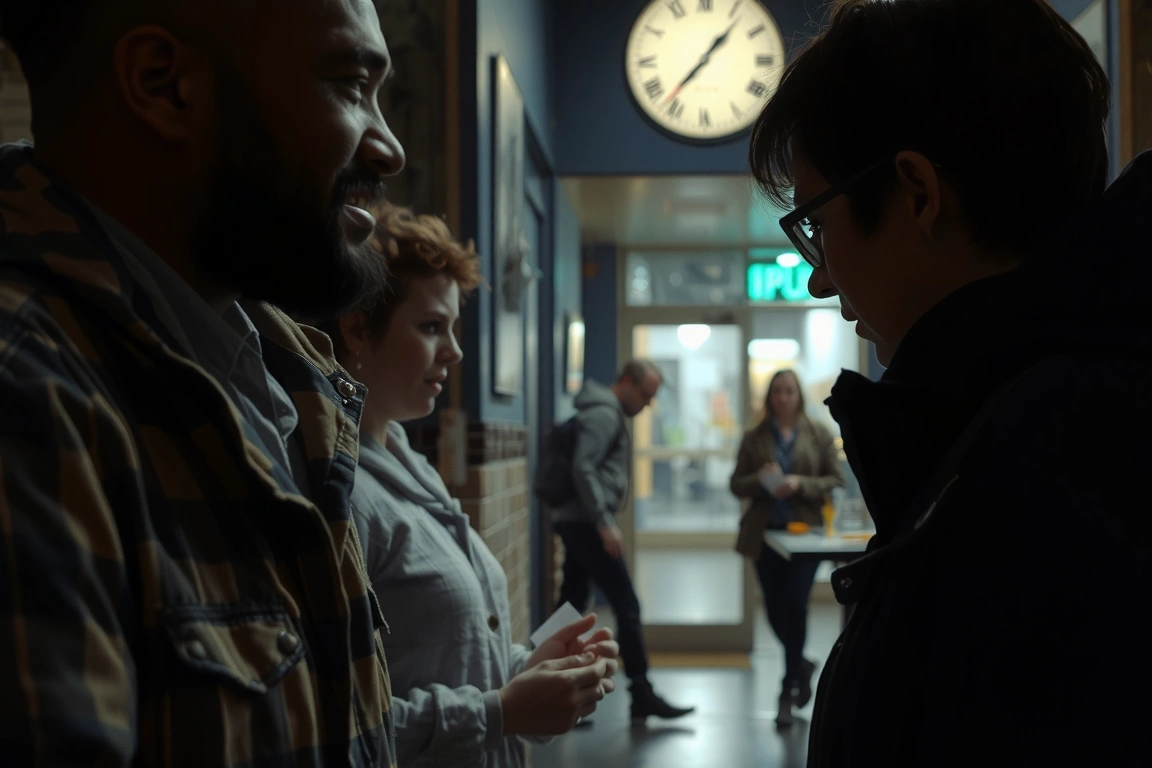
The motel night manager deals with a different population. Travelers who arrived too late to check in elsewhere. People who need a room by the hour. Families whose car broke down, couples arguing in the parking lot, single men who pay in cash and refuse to give a license plate number. The motel desk sees desperation in a way the convenience store doesn’t. A person buying a Red Bull at 3 AM might just be tired. A person renting a room at 3 AM is often running from something — a bad situation, a bad decision, or the police. The night manager processes their IDs, takes their cash, and hands them a key to a room they’ll never see again. Sometimes that’s the last interaction anyone has with them.
Both jobs require reading people quickly. The convenience store clerk watches hands — where they go, what they touch, whether they stay visible. The motel night manager watches eyes — whether they meet yours, whether they drift to the exits, whether they look at the register or the security camera. One set of skills is about preventing a robbery. The other is about preventing something worse.
Paranormal Encounters: When the Living Aren’t the Problem
This is where the comparison gets strange. Both convenience store clerks and motel night managers report paranormal encounters at rates significantly higher than the general population. A 2019 survey by the Night Shift Workers Association found that 41% of night workers in retail and hospitality reported at least one unexplained experience on the job — compared to 18% of day workers. But the types of encounters differ between the two roles.
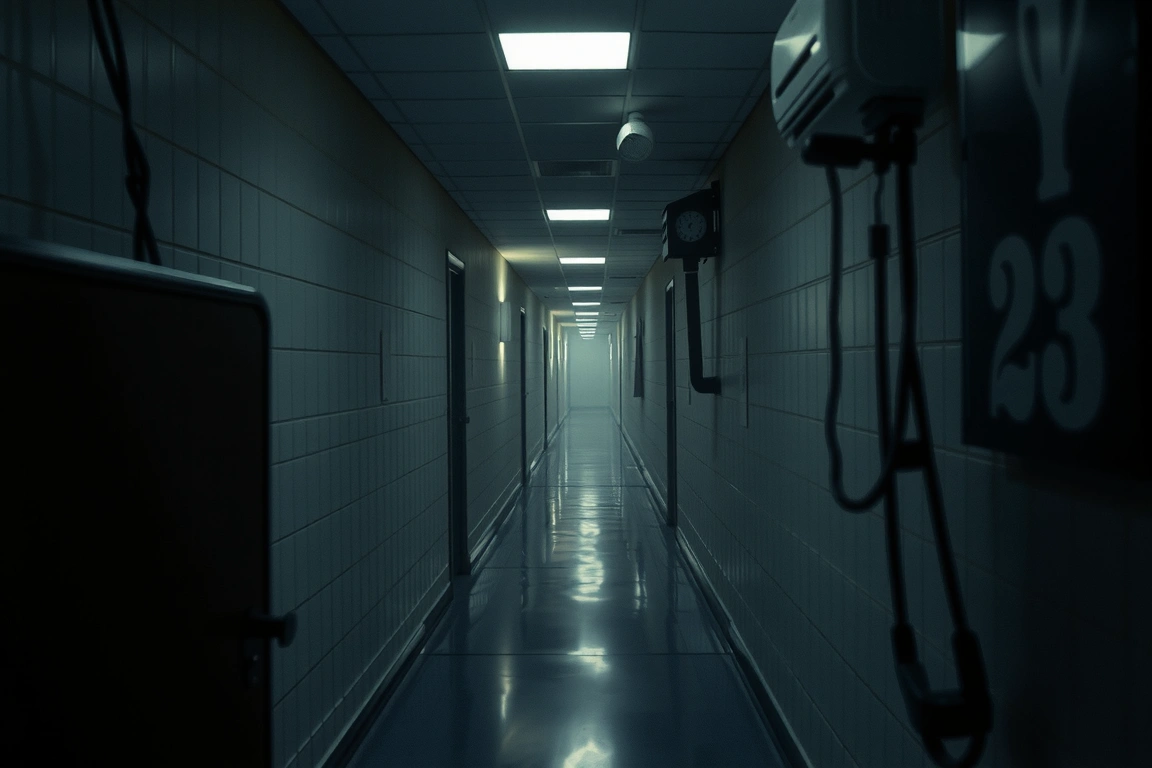
Convenience store clerks report seeing figures in the aisles — people who aren’t there, who vanish when looked at directly. The phenomenon is common enough that clerks have a name for it: “aisle walkers.” They’re described as tall, thin, and silent. They don’t interact. They just walk the aisles, sometimes for minutes, before disappearing. One clerk at a 7-Eleven in Phoenix, Arizona reported seeing the same figure three nights in a row between 3:12 AM and 3:15 AM. Security footage showed nothing. The store had been built on land that was previously a cemetery relocated in 1954 — but only 60% of the graves were moved. The rest were left in place.
Motel night managers report more interactive encounters. Voices in empty rooms. Doors that unlock themselves. Guests who check in but never leave — not because they stay, but because their room is found empty in the morning with the bed still made and the key still on the desk. The Cecil Hotel in Los Angeles is the most famous example, but similar stories come from motels in smaller towns — the Motel 6 in Flagstaff, the Super 8 in Salina, the independent motels along old highway routes where the registers are handwritten and the rooms haven’t been renovated since the 1970s. Night managers at these properties report that certain rooms are “active” — room 107 at a motel in Tulsa, room 312 at a motel in Boise, room 9 at a motel in rural Oregon. The same rooms, over and over, regardless of who stays in them.
The difference is telling. Convenience store encounters are passive — you see something, but it doesn’t see you. Motel encounters are active — something knows you’re there. The convenience store ghost walks the aisles. The motel ghost knocks on the office door.
Criminal Threats: The Real Danger of the Night Shift
The paranormal is unsettling. The criminal is immediate. And here, the data is clear: convenience store clerks face more physical danger than motel night managers. The Bureau of Labor Statistics reports that convenience store workers have a workplace homicide rate of 4.3 per 100,000 workers — nearly four times the national average for all occupations. Robberies account for 87% of these incidents. The majority occur between 11 PM and 4 AM, with the clerk alone in the store.
Motel night managers face a different kind of criminal threat. Robberies happen, but less frequently — the BLS reports a homicide rate of 1.8 per 100,000 for hotel and motel workers. The more common threat is assault. Guests who become violent. People who break into rooms. Human trafficking operations that use motels as staging points. The Polaris Project, which operates the National Human Trafficking Hotline, reports that 43% of trafficking cases involve hotels or motels. Night managers are often the first to notice signs — guests who pay in cash, rooms with constant traffic, people who seem controlled by someone else. The threat isn’t a gun at the register. It’s a slow, creeping awareness that something illegal is happening in the building, and you’re the only one who might notice.
The timeline differs too. A convenience store robbery lasts three to five minutes. It’s fast, violent, and over. A motel trafficking operation can last weeks or months. The night manager sees the same car every night, the same room, the same pattern. The threat builds slowly, and by the time it’s clear, it’s already too late to do anything simple about it.
The Weight of Silence: Psychological Toll of Each Role
Convenience store clerks describe the silence as loud. The hum of the cooler, the buzz of the lights, the occasional beep of the register — these sounds fill the space but don’t break the silence. Clerks report that the first hour of the shift is the hardest, from midnight to 1 AM, when the store is empty and the parking lot is dark. The mind starts to play tricks. Shadows move in the corner of your vision. You hear footsteps that aren’t there. The longer you’re alone, the more your brain tries to fill the empty space with something — anything — that makes sense of the solitude.
Motel night managers describe the silence as heavy. The building itself makes sounds — the HVAC system, the pipes, the footsteps of guests moving between rooms. But the silence between those sounds is different. It’s the silence of dozens of people sleeping behind closed doors, each one a mystery. The night manager sits at the desk and listens to the building breathe. They know which rooms are occupied, which guests checked in late, which ones paid cash. They know the layout of the building, the blind spots in the camera coverage, the doors that don’t lock properly. The weight of that knowledge — the awareness of every vulnerability in the building — is what wears on them over time.
Both roles lead to sleep disruption, hypervigilance, and difficulty switching off after the shift ends. But the specific trauma differs. Convenience store clerks carry the memory of the robbery — the gun, the voice, the seconds that felt like hours. Motel night managers carry the memory of what they saw — the bruises on
Related from our network
- From knowledge base: witchcraft beginner guides, moon magic, sabbats, spells, grounding. Competitors show “Witchcraft 101”, “Grounding techniques”. Need titles that are specific, use numbers/years/pro (animalsouldecoder)
- (moonrituallibrary)
- (wealthfromai)
You Might Also Like

Stories From the Graveyard Shift
True stories from nurses, truckers, hotel clerks, and security guards who work while the world sleeps. Weekly dispatch.
No spam. Unsubscribe anytime.
