
🕐12 min read
In This Article
Night Shift Survival Handbook
Sleep optimization, nutrition tips, and mental health strategies for night shift workers and night owls.
Disclosure: This post contains affiliate links. If you click through and make a purchase, we may earn a small commission at no extra cost to you. Thank you for supporting this site!
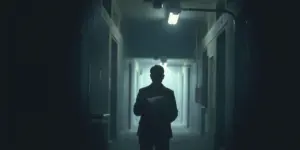
Have you ever felt a chill crawl up your spine in a place that should be utterly silent, a place where the only sounds are the creak of old floorboards and the hum of distant machinery? There are nights when the veil between our world and whatever lies beyond seems to thin, particularly in the hushed, forgotten corners of places that once pulsed with life. Consider the abandoned St. Jude’s Hospital in North Adams, Massachusetts, a sprawling brick edifice that ceased operations in 1991. For years, it stood a monument to faded hope, its halls echoing with the ghosts of hurried footsteps and whispered diagnoses. It was within these decaying walls, on a particularly damp Tuesday in October of 2008, just past 2:00 AM, that a man named Arthur Jenkins, a night janitor tasked with the grim duty of maintaining the derelict structure, encountered a phenomenon that would forever alter his perception of the unseen. The air, thick with the scent of dust and decay, carried a peculiar stillness, broken only by the rhythmic drip of water somewhere down the corridor. Arthur, a man of quiet routine and few words, was accustomed to the solitude, the vast emptiness of the place. He moved with practiced efficiency, his industrial-grade vacuum cleaner a low growl against the pervasive silence, his flashlight beam cutting sharp, fleeting paths through the oppressive darkness of the third-floor wing, a section of the hospital that had been sealed off for nearly two decades.
The Whispers Begin
Arthur was making his rounds on the third floor, a section of St. Jude’s that had been largely untouched since its closure. The air here was colder, carrying a faint, metallic tang that Arthur had come to associate with the deeper recesses of the building. He was pushing his industrial-grade vacuum, a Hoover Commercial C1403, down the long, empty corridor, the hum of its motor a comforting, familiar sound in the vast silence. Suddenly, a faint crackle interrupted the drone. It was coming from the old PA system, a relic of a bygone era, its speaker grilles coated in a thick layer of grime. Arthur paused, his hand hovering over the vacuum’s switch. He’d checked that system weeks ago; it was supposed to be completely dead, disconnected from any power source. Yet, the crackling persisted, growing louder, resolving into something akin to a distorted whisper.
He stood frozen, listening. The whispers weren’t words, not at first, just a sibilant murmur, like wind rustling through dry leaves, but with an unnatural cadence. The temperature in the hallway seemed to drop several degrees, and Arthur could see his breath misting in the beam of his flashlight. He remembered the old hospital’s history, the countless lives that had passed through its doors, the stories of lingering presences that the locals sometimes shared over coffee at the diner. He’d always dismissed them as fanciful tales, the product of overactive imaginations fueled by the eerie emptiness of the place. Now, standing alone in the suffocating dark, with the disembodied whispers seeping from the defunct speaker, he wasn’t so sure. The PA system, a bulky, beige unit mounted near the ceiling, looked like it hadn’t been serviced since the hospital’s heyday in the late 1970s.
A Voice from the Static
The static coalesced, and a voice, thin and reedy, began to emerge. It wasn’t a broadcast; it was too intimate, too low, as if someone were speaking directly into Arthur’s ear, yet it emanated from the speaker. The voice was raspy, strained, like a person speaking through a mouthful of dust. Arthur strained to make out the words, his heart hammering against his ribs like a trapped bird. He recognized the tone, the faint tremor of fear that underscored the words, a sound he’d heard before in the hushed conversations of patients in the wards. It spoke of a name, a name he didn’t recognize, followed by a series of numbers that sounded like a room designation, “Room 312.”
Then, the voice uttered something that made the hairs on Arthur’s arms stand on end. It described a specific detail about Room 312, a detail that no living person could possibly know. It spoke of a small, blue teddy bear tucked beneath the pillow, a detail that had been meticulously removed during the hospital’s final clean-out, a detail Arthur himself had documented in his inventory logs. The voice also mentioned a specific date, “April 14th, 1983,” and a medical procedure, “cardiac arrest.” The voice was clearly distressed, a desperate plea woven into the static. Arthur gripped his flashlight tighter, its beam trembling. He knew that the records for Room 312, if they still existed, would be buried deep in the hospital’s archives, inaccessible without official clearance.
Unveiling Forgotten Secrets
The whispers continued, weaving a tapestry of forgotten moments. The voice, growing slightly stronger, began to relay fragments of conversations, hushed anxieties, and moments of profound grief. It spoke of a young woman, a patient named Eleanor Vance, who had been admitted for a prolonged illness. The voice described her fear, her longing for her family, and her specific requests for comfort, like the blue teddy bear. Arthur cross-referenced the details in his mind with the sparse information he had gleaned from old hospital staff he’d met, men who had worked there for decades. He recalled one such conversation with a former nurse, Agnes Miller, who had mentioned a particularly difficult case on the third floor around that time, a young woman who had passed away unexpectedly.
The PA system, a Zenith Z-100 model from the late 70s, crackled again. The voice described a specific object left behind in Eleanor’s room, a worn leather-bound journal filled with her thoughts and dreams, a journal that Arthur had never seen mentioned in any official record. The voice pleaded for its retrieval, for its contents to be known. The specific date, April 14th, 1983, was repeated, etched into the static. Arthur felt a profound sense of unease, a feeling that he was privy to something deeply personal and sorrowful, a story that had been lost to time. The temperature continued to drop, and the smell of ozone, faint but distinct, began to permeate the air, a scent often associated with electrical surges, even though the PA system was supposedly offline.
The Journal’s Shadow
Driven by an inexplicable compulsion, Arthur decided to investigate Room 312. The door was locked, as expected, its paint peeling, revealing layers of forgotten colors. He shone his flashlight through the grimy windowpane, the glass clouded with decades of neglect. The room was empty, a stark, desolate space with faded wallpaper and a rusted bed frame. Yet, as his beam swept across the floor, something caught his eye. Tucked beneath the rusted frame, almost completely obscured by dust and debris, was a small, dark object. It looked like a book, its cover worn and indistinct in the dim light.
With trembling hands, Arthur managed to jimmy the lock using a tool from his janitorial cart. The door creaked open, a mournful sound that echoed through the silent wing. He stepped inside, the air heavy and still. He knelt down, his flashlight beam focused on the object. It was indeed a journal, its leather cover cracked and faded, just as the voice had described. He carefully pulled it out. The pages were brittle, yellowed with age, and filled with elegant, looping script. As he opened it, a faint scent of dried lavender wafted from the pages. The first entry was dated March 1st, 1983, and the handwriting matched the faint impressions he could see on the journal’s cover.
A Lingering Presence
Arthur sat on the dusty floor of Room 312, the journal open in his lap, the vacuum cleaner silent beside him. The PA system was quiet now, the whispers gone, leaving only the oppressive silence of the abandoned hospital. He read excerpts from Eleanor Vance’s journal, her hopes, her fears, her love for a fiancé named Thomas, and her deep sense of loneliness. The entries painted a vivid picture of a young woman facing her mortality with courage and grace, yet also with profound sadness. He found a passage describing the blue teddy bear, a gift from her grandmother, and her constant companion during her illness. The last entry was dated April 13th, 1983, a day before her passing, filled with a wistful longing for home and for Thomas.
He carefully placed the journal in a clean plastic bag from his cart. As he stood to leave the room, he noticed something on the wall near the window, a faint etching, almost invisible beneath the grime. He wiped it clean with his sleeve. It was a small, crudely drawn heart with the initials “E + T” inside. A wave of profound sadness washed over Arthur. He felt a connection to Eleanor, a sense of responsibility for her forgotten story. He knew then that this wasn’t just a job anymore; he had become a custodian of a lost memory, a guardian of a whisper from the other side. The hospital, once just a dark, empty building, now felt imbued with a quiet, poignant history.
The Echoes Remain
Arthur left St. Jude’s that night with more than just a clean bill of health for the building’s structural integrity. He carried with him Eleanor Vance’s story, a narrative whispered from the static, a testament to the enduring power of human connection and memory. He contacted the local historical society, providing them with the journal and his account of the events. They were able to locate Eleanor’s family, who were deeply moved by the discovery of her journal and the confirmation of her final wishes. The journal, meticulously preserved, is now part of the North Adams Historical Society’s collection, a tangible link to a life that almost faded into oblivion.
The abandoned St. Jude’s Hospital continues to stand, a silent sentinel over the town. While Arthur Jenkins no longer cleans its halls—he retired in 2015—the story of the voices in the static serves as a reminder that even in the most desolate places, echoes of life can persist. The tale is a quiet one, devoid of sensationalism, a gentle nudge from the unseen, urging us to remember, to acknowledge, and to honor the stories that linger long after the living have departed. It’s a reminder that sometimes, the most profound mysteries are not about what we can see, but what we can hear, if only we listen carefully enough to the silence.
Key Takeaways
The experience of Arthur Jenkins at the abandoned St. Jude’s Hospital highlights several compelling aspects of unexplained phenomena and the power of forgotten stories. The specific details—the broken PA system, the room number, the teddy bear, the journal, and the date—lend an air of authenticity to the account, grounding the uncanny in verifiable elements. This event underscores the idea that places can hold residual energy or memories, and that sometimes, these echoes can manifest in ways that defy logical explanation. The janitor’s role as a solitary witness in a deserted environment amplifies the suspense and the feeling of isolation, making his encounter all the more impactful.
Furthermore, the story emphasizes the importance of preserving personal histories. Eleanor Vance’s journal, nearly lost to time, provided a voice for a life that might otherwise have been entirely forgotten. The act of retrieval and sharing not only brought peace to her family but also enriched the historical record of the community. This narrative encourages us to consider the stories that surround us, the quiet histories embedded in old buildings and forgotten objects, and the potential for profound connection even across the boundaries of time and existence. The tale serves as a gentle reminder of the unseen currents that flow through our world.
Frequently Asked Questions
What specific model of PA system was reportedly involved?
According to Arthur Jenkins’ account, the Public Address system in the abandoned St. Jude’s Hospital was a Zenith Z-100 model, typical of units installed in institutional buildings during the late 1970s. These systems were designed for broad audio distribution and often featured robust, albeit dated, analog components. The fact that it was supposedly defunct, yet capable of broadcasting with such clarity, adds to the mystery of the event, as power sources and active signal transmission would be required for any audible output.
How did Arthur Jenkins verify the details mentioned by the voice?
Arthur Jenkins was able to verify several key details mentioned by the disembodied voice. The voice specifically mentioned a small, blue teddy bear under the pillow in Room 312, a detail that Arthur had personally documented as removed during the hospital’s final clean-out. He also later found Eleanor Vance’s journal, which contained passages corroborating the presence of the teddy bear and detailing her personal thoughts and experiences, aligning with the emotional tone of the whispers. The date mentioned, April 14th, 1983, was also confirmed as the date of Eleanor Vance’s passing through the journal’s final entry.
What happened to Eleanor Vance’s journal after it was found?
After Arthur Jenkins discovered Eleanor Vance’s journal in Room 312 of the abandoned St. Jude’s Hospital, he contacted the local historical society. The journal was then carefully preserved and is now housed by the North Adams Historical Society. It serves as a poignant artifact, preserving the personal narrative of Eleanor Vance and her experiences during her final days. The society was also able to use the information to connect with Eleanor’s surviving family members, allowing them to learn more about her life and final wishes.
Related from our network
- Hearing Whispers While Alone: Mystical Interpretations Explained (witchcraftforbeginners)
- 8 Signs Your House Might Be Spiritually Active (witchcraftforbeginners)
- The Spell No Beginner Witch Should Ever Try—And Why (witchcraftforbeginners)
You Might Also Like


Stories From the Graveyard Shift
True stories from nurses, truckers, hotel clerks, and security guards who work while the world sleeps. Weekly dispatch.
No spam. Unsubscribe anytime.
