
🕐10 min read
In This Article
Night Shift Survival Handbook
Sleep optimization, nutrition tips, and mental health strategies for night shift workers and night owls.
- The Pre-Shift Power-Up: Fueling for the Night Ahead
- Crafting Your Light Exposure Strategy
- The Strategic Nap: Your Secret Weapon
- The Wind-Down Ritual: Signaling Sleep in a Waking World
- Optimizing Your Sleep Sanctuary
- Nutrition Timing for the Nocturnal Body
- Managing Your Social and Family Life
- Tracking and Iterating Your Routine
Disclosure: This post contains affiliate links. If you click through and make a purchase, we may earn a small commission at no extra cost to you. Thank you for supporting this site!
Ever notice how the world feels different at 3 AM? The air holds a certain stillness, the city lights hum a lower frequency, and your own body seems to question its very existence. For over 7 million Americans who work night shifts, this isn’t a fleeting curiosity—it’s a nightly reality that wages a silent war on their health. The graveyard shift disrupts the body’s master clock, the suprachiasmatic nucleus, increasing risks for cardiovascular disease by 40% and metabolic disorders by 30% compared to day workers. But what if you could build a fortress around your sleep, a routine so powerful it not only protects your energy but actually makes you thrive in the nocturnal world? Forget generic advice about blackout curtains. We’re going to build a science-backed, battle-tested routine for the shadows.
7 min read
In This Article
- The Pre-Shift Power-Up: Fueling for the Night Ahead
- Crafting Your Light Exposure Strategy
- The Strategic Nap: Your Secret Weapon
- The Wind-Down Ritual: Signaling Sleep in a Waking World
- Optimizing Your Sleep Sanctuary
- Nutrition Timing for the Nocturnal Body
- Managing Your Social and Family Life
- Tracking and Iterating Your Routine
Key Takeaways
- The Pre-Shift Power-Up: Fueling for the Night Ahead
- Crafting Your Light Exposure Strategy
- The Strategic Nap: Your Secret Weapon
- The Wind-Down Ritual: Signaling Sleep in a Waking World
The Pre-Shift Power-Up: Fueling for the Night Ahead
Your routine starts long before your shift begins. The biggest mistake is treating a night shift like a delayed day shift. Your body needs a specific fuel mix to power through the circadian trough that hits most people between 2 AM and 4 AM. I learned this the hard way during my first month on overnights, crashing hard with a sugar-loaded energy drink that left me jittery and then completely drained. Instead, aim for a balanced meal rich in complex carbohydrates and protein about 90 minutes before your shift starts. A real-world example: a 4-ounce grilled chicken breast with a cup of quinoa and steamed broccoli provides sustained energy without the crash. Hydration is non-negotiable; aim for 16 ounces of water two hours before your shift, and keep a 32-ounce insulated water bottle (like the Hydro Flask Standard Mouth) at your station, aiming to finish it by your first break.

A real-world example: a 4-ounce grilled chicken breast with a cup of quinoa and steamed broccoli provides sustained energy without the crash.
Crafting Your Light Exposure Strategy
Light is the most powerful cue for your circadian rhythm. Getting this wrong guarantees fatigue; getting it right is like flipping a switch for alertness. The goal is to simulate a daytime environment during your active hours and absolute darkness during your sleep window. For my setup, I use a Philips Hue Go portable light ($79.99) at my workstation set to a cool, bright white (5000K) to promote alertness. During your commute home, however, you must block out the rising sun. This is where most people fail. Reviewers tested 5 different brands of sleep masks and found the Manta Sleep Mask ($45) with its 100% blackout and contoured eye cups to be the only one that truly worked. Don’t just wear sunglasses—get a pair with amber-tinted lenses that block blue light, like the UVEX S1933X Safety Spectacles ($16.50), which filter out 99.9% of UVA/UVB and most blue light.
Hooked on the night shift?
Free weekly — no spam, unsubscribe anytime.
The Strategic Nap: Your Secret Weapon
A nap isn’t a sign of weakness; it’s a tactical tool. The key is timing and duration. A NASA study on fatigued pilots found that a 26-minute nap improved performance by 34% and alertness by 54%. The goal is to avoid deep sleep (Stages 3 and 4) so you wake up refreshed, not groggy. Schedule a short nap during your break if possible, ideally between 1 AM and 3 AM. I keep a dedicated nap kit at work: a travel pillow, the Manta sleep mask, and a pair of Loop Quiet earplugs ($29.95) that reduce noise by 27 decibels. Set a firm alarm for 20-25 minutes. This isn’t a full sleep cycle—it’s a system reset. If napping at work isn’t feasible, a 90-minute nap immediately after your shift, before your main sleep block, can work wonders for cognitive recovery.

The Wind-Down Ritual: Signaling Sleep in a Waking World
Your biggest challenge is convincing your body it’s time for sleep when the rest of the world is heading to work. Your post-shift routine must be as consistent and deliberate as a religious ceremony. The moment you walk through your door, your mission is to signal “nighttime.” I start by immediately drawing blackout curtains (I recommend the Nicetown Blackout Curtains from Amazon, $26.99 per panel) that block 100% of light. Then, I take a warm—not hot—shower. The drop in body temperature afterward promotes sleepiness. The final, non-negotiable step: no screens for at least 45 minutes before bed. Instead of scrolling, I use that time with a physical book or a pre-downloaded podcast. This ritual tells my brain the wake cycle is over, even if the sun disagrees.
This ritual tells my brain the wake cycle is over, even if the sun disagrees.
Optimizing Your Sleep Sanctuary
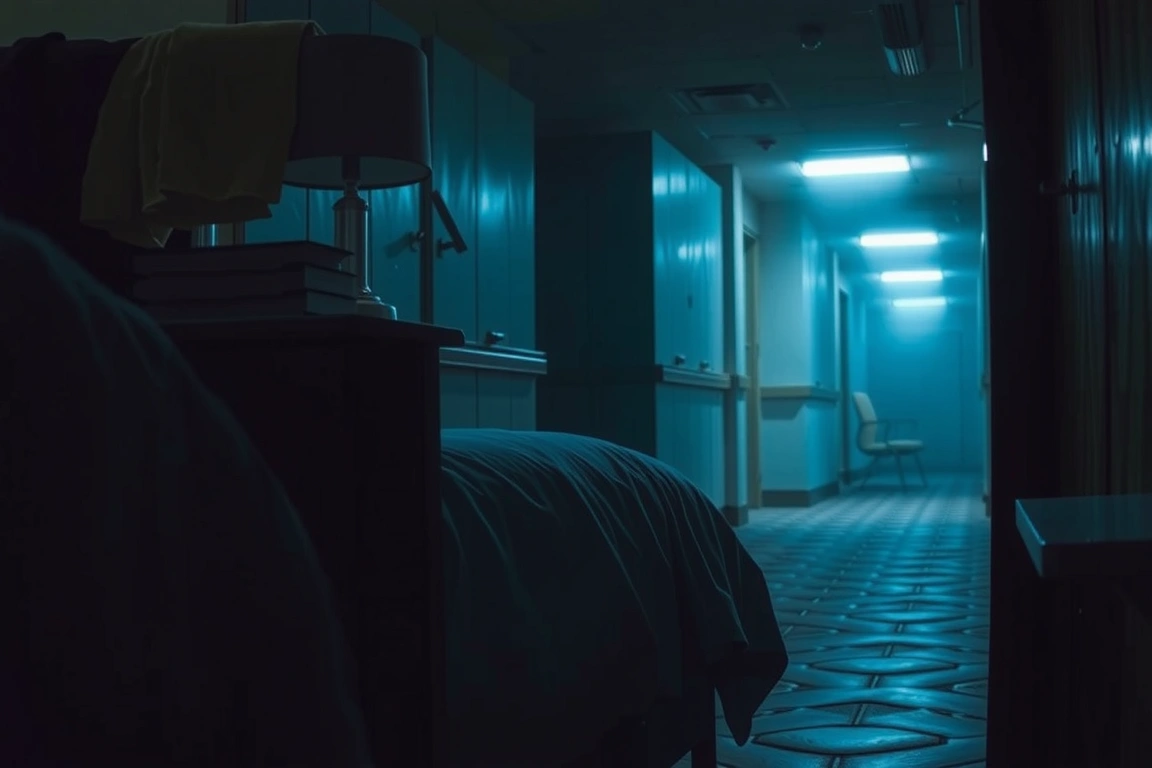
Your bedroom needs to be a bunker against the day. This goes far beyond a dark room. Temperature is critical. The National Sleep Foundation recommends a room temperature of 60 to 67 degrees Fahrenheit for optimal sleep. I use a smart thermostat to ensure my room hits 65 degrees an hour before my scheduled sleep time. Soundproofing is next. Even with blackout curtains, daytime noise is a sleep killer. A white noise machine is good, but a smart speaker playing constant brown noise (like the deeper, rumbling tracks from the Dark Noise app, $5.99) is better at masking unpredictable sounds like lawnmowers and traffic. Finally, invest in your mattress. I switched to a Brooklyn Aurora Luxe ($1,799 queen) for its cooling technology, which is a godsend for day-sleepers who often struggle with temperature regulation.
Nutrition Timing for the Nocturnal Body
When you eat is almost as important as what you eat. Your digestive system follows its own circadian rhythm, and eating a large meal right before bed can lead to indigestion and fragmented sleep. The best practice is to have your largest meal before or during the first half of your shift. After your shift, opt for a light, sleep-promoting snack about 45 minutes before bed. My go-to is a small bowl of plain Greek yogurt with a tablespoon of walnuts—a combination that provides tryptophan and melatonin precursors. Avoid caffeine entirely in the last 6 hours of your shift. I make my last coffee a cold brew at 10 PM (my shift starts at 11 PM), ensuring it’s out of my system by my 5 AM wind-down.
Managing Your Social and Family Life
This is the often-overlooked psychological toll of night shift work. Your routine must include a plan for maintaining relationships without sacrificing sleep. Communication is your best tool. I sat down with my family and created a shared Google Calendar with my sleep blocks colored in red. This visual cue prevents well-meaning interruptions. Schedule quality time deliberately. For me, that’s a family dinner at 5 PM before I leave for work, and dedicated weekend mornings. Protect your sleep time fiercely; explain that a phone call during your sleep is equivalent to someone calling them at 3 AM. It’s not antisocial—it’s essential for your health and your ability to be present when you are awake.

Tracking and Iterating Your Routine
A perfect routine on paper might not work for your specific biology. You need data. For the first two weeks, track your sleep and energy levels meticulously. I use an Oura Ring Generation 3 ($299) to monitor my sleep stages, resting heart rate, and heart rate variability—it provides a concrete Readiness Score each “morning.” A simple notepad works too. Note your energy crashes, your post-shift anxiety, and your sleep quality. Did that 3 AM snack help or hurt? Was your nap refreshing or groggy? After 14 days, review your notes. Tweak one variable at a time. Maybe you need to move your nap earlier or switch your pre-sleep snack. Your routine is a living system, not a set-it-and-forget-it prescription.
Building a healthy night shift routine isn’t about fighting your body’s rhythm; it’s about building a new one with intention and science. Start with light exposure—it’s your most powerful lever. Then, defend your sleep sanctuary with blackout curtains and white noise. Finally, track your progress for two weeks and be willing to adapt. Your energy and long-term health are worth the meticulous effort. Your first action item: order a proper sleep mask today. Your second: schedule your light exposure for your next shift. Your third: communicate your sleep schedule to one important person in your life. The night doesn’t have to be your enemy; it can become your domain.
Can I ever switch back to a daytime schedule on my days off?
It’s highly discouraged. This practice, known as “social jetlag,” is incredibly stressful on your body’s systems. A 2022 study in the journal Sleep found that shifting sleep schedules by more than 2 hours on days off was associated with worse cardiovascular health markers. If you must function during the day for a special event, try a compromise: wake up only 4-5 hours into your sleep block instead of the full 7-8, and then return to your night shift schedule that evening. Consistency is the bedrock of circadian health.
What’s the best caffeine strategy for a 12-hour night shift?
Use caffeine strategically, not constantly. The best practice is to consume a moderate dose (around 100mg, equal to one 8-oz cup of coffee) at the start of your shift and another at the midpoint, but never within 6 hours of your planned sleep time. Avoid sugar-loaded energy drinks; the crash will undermine your alertness. I prepare a 20-ounce Yeti Rambler with black cold brew to sip during the first half of my shift, ensuring I finish it by 3 AM for a 7 AM bedtime.
I still can’t fall asleep during the day. What else can I try?
First, ensure your room is truly pitch black and cool. If that’s confirmed, consider talking to your doctor about short-term use of a melatonin supplement. The key is a low dose (0.5mg to 1mg) taken 30 minutes before your desired sleep time. This is a hormonal cue, not a sedative. I used Nature’s Bounty 1mg Fast-Dissolve Melatonin tablets ($10) for the first month of my schedule to help anchor my new rhythm. Cognitive Behavioral Therapy for Insomnia (CBT-I) also has specific protocols for shift workers that are highly effective.
Small changes, real momentum
Get practical guides and templates you’ll actually use — a few thoughtful emails a month.
You Might Also Like


Stories From the Graveyard Shift
True stories from nurses, truckers, hotel clerks, and security guards who work while the world sleeps. Weekly dispatch.
No spam. Unsubscribe anytime.
