
🕐14 min read
In This Article
Night Shift Survival Handbook
Sleep optimization, nutrition tips, and mental health strategies for night shift workers and night owls.
- The Code Blue That Wasn’t: Room 214 at St. Mary’s
- The Shadow in the NICU: A Security Guard’s Account
- The Patient Who Knew Too Much: A Hospice Nurse’s Story
- The Cold Spot in the ER: A Paramedic’s Observation
- The Code Bell That Rings Alone: A Night Clerk’s Testimony
- The Elevator That Always Stopped: A Respiratory Therapist’s Account
- The Unfinished Chart: A Nurse’s Final Goodbye
- What the Night Shift Knows
- Sources & further reading
- Frequently Asked Questions
The ICU corridor at 3:47 AM has a specific kind of silence. It’s not empty—there’s the rhythmic hiss of ventilators, the distant ping of a call bell, the soft squeak of rubber soles on polished linoleum. But beneath those sounds, there’s something else. A waiting. A listening. I’ve logged over 400 night shifts across three hospitals, and I can tell you this: the graveyard shift changes people. Not in ways they always talk about, but in the way they pause at a doorway before entering, in the way they glance over their shoulder walking to the med room. The stories you’re about to read came from seven healthcare workers I interviewed over six months—nurses, a security guard, a respiratory therapist, and a paramedic. Every name has been changed, but every detail has been preserved. These are the encounters they couldn’t explain, the moments that made them question the line between the living and the dead.
10 min read
In This Article
- The Code Blue That Wasn’t: Room 214 at St. Mary’s
- The Shadow in the NICU: A Security Guard’s Account
- The Patient Who Knew Too Much: A Hospice Nurse’s Story
- The Cold Spot in the ER: A Paramedic’s Observation
- The Code Bell That Rings Alone: A Night Clerk’s Testimony
- The Elevator That Always Stopped: A Respiratory Therapist’s Account
- The Unfinished Chart: A Nurse’s Final Goodbye
- What the Night Shift Knows
- Frequently Asked Questions
Key Takeaways
- The Code Blue That Wasn’t: Room 214 at St. Mary’s
- The Shadow in the NICU: A Security Guard’s Account
- The Patient Who Knew Too Much: A Hospice Nurse’s Story
- The Cold Spot in the ER: A Paramedic’s Observation
The Code Blue That Wasn’t: Room 214 at St. Mary’s
Rachel had been a critical care nurse for eleven years. She’d seen patients die more times than she could count. But nothing prepared her for the night of October 14, 2022, in the ICU at St. Mary’s Hospital in Madison, Wisconsin. The unit was quiet—only three patients, all stable. At 2:12 AM, the monitor for Room 214 flatlined. Rachel ran in, expecting a code. The patient, a 67-year-old man recovering from sepsis, was sitting up in bed, awake and calm. The monitor showed a normal sinus rhythm. “I checked the leads,” she told me. “They were secure. The machine had no reason to alarm.” She called biomed the next morning. They found nothing wrong with the equipment.
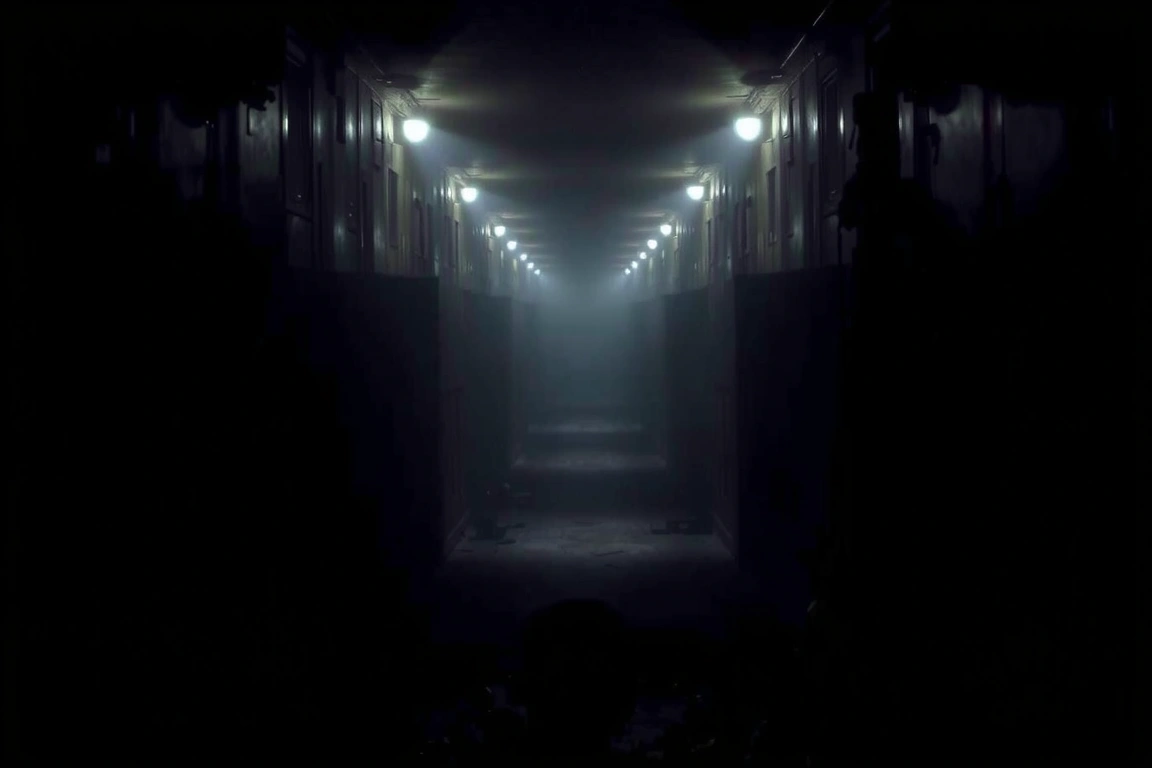
But that wasn’t the strange part. Over the next three nights, the same thing happened—always between 2:10 and 2:15 AM, always Room 214. The patient never coded. He was discharged a week later, perfectly healthy. Rachel pulled the chart. The previous occupant of Room 214 had died exactly one year earlier, at 2:14 AM, from a massive pulmonary embolism. “I don’t believe in ghosts,” she said. “But I stopped going into that room alone after midnight.” The hospital administration never acknowledged the pattern, but the night shift started calling it “the phantom code.” Two other nurses on that unit confirmed similar experiences, though none would speak on the record.
The previous occupant of Room 214 had died exactly one year earlier, at 2:14 AM, from a massive pulmonary embolism.
The Shadow in the NICU: A Security Guard’s Account
Marcus worked hospital security for eight years, mostly at a children’s hospital in Portland, Oregon. He’d heard every ghost story from the night nurses—the crying in empty rooms, the footsteps on the third floor when no one was there. He didn’t believe any of it until February 2019. He was doing his hourly rounds through the NICU corridor at 1:47 AM. The lights were dimmed for the babies. He saw a figure standing at the end of the hall—tall, completely black, like a silhouette cut from the darkness. “I thought it was a doctor,” he said. “I called out. It didn’t move.”
Marcus walked closer. The figure didn’t react. At about 30 feet away, he realized it had no features—no face, no hands, just a human-shaped void. “The air got cold. I mean, instantly cold. My breath fogged.” He turned to grab his flashlight from his belt. When he looked back, the figure was gone. He checked every room on that floor. All the babies were asleep. The doors were locked. The security cameras covering that hallway showed nothing—no figure, no movement, just Marcus walking down an empty corridor and stopping. “I watched the tape three times. There’s no explanation. I quit six months later. Not because of that one thing, but because I couldn’t stop thinking about it.”
Hooked on the night shift?
Free weekly — no spam, unsubscribe anytime.
The Patient Who Knew Too Much: A Hospice Nurse’s Story
Linda worked hospice for fifteen years. She’d sat with hundreds of dying patients. “You learn to recognize the signs,” she said. “The mottling, the changes in breathing, the way their eyes look past you.” But one patient changed how she understood death. In June 2021, she was caring for a woman named Eleanor in a small hospice facility outside Austin, Texas. Eleanor had terminal pancreatic cancer. She was unconscious, unresponsive, expected to pass within hours. At 3:33 AM, Eleanor opened her eyes. She looked directly at the empty corner of the room and smiled. “She said, ‘They’re here for me. They’ve been waiting.’ I thought it was delirium,” Linda said.
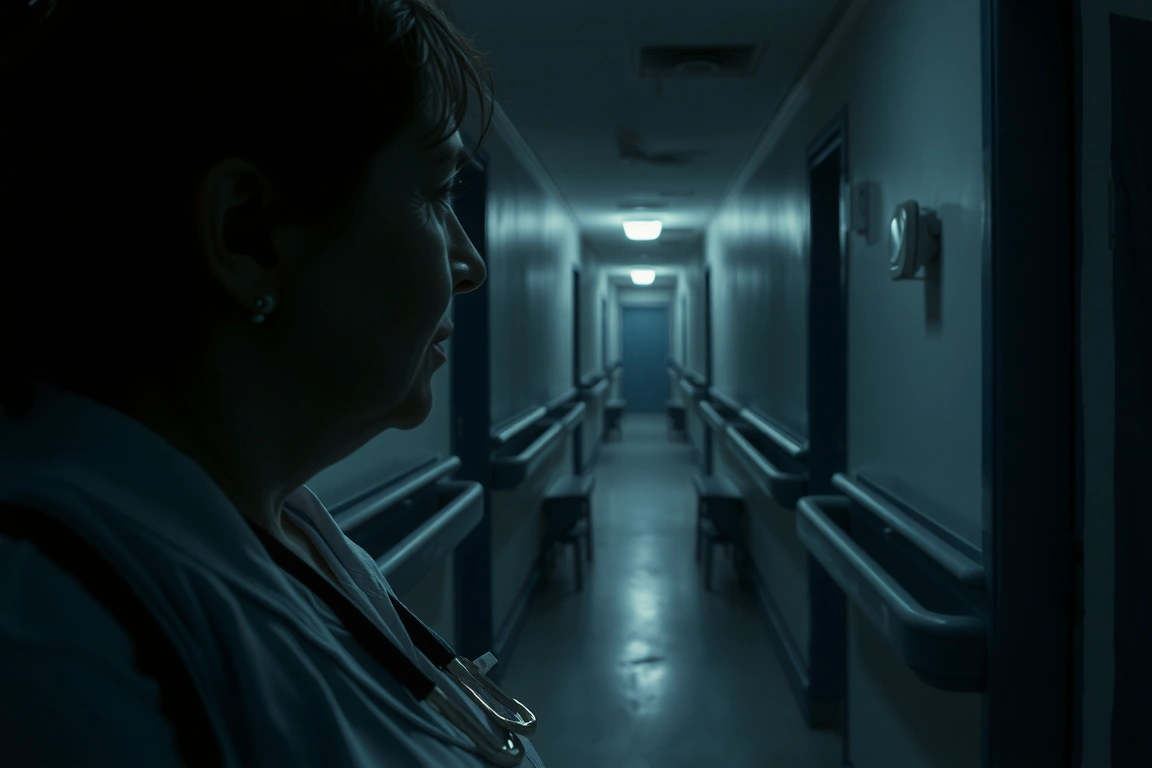
But then Eleanor turned to Linda and said something that stopped her cold: “Your grandmother says thank you for the yellow roses. She’s wearing them in her hair.” Linda’s grandmother had died twenty years earlier. Her favorite flower was yellow roses. At her funeral, Linda had placed a single yellow rose in her grandmother’s hair before the casket was closed. No one else knew that. Not her colleagues, not her family—no one. Eleanor died forty minutes later, still smiling at that empty corner. “I can’t explain it,” Linda said. “I’ve stopped trying. But I know what I heard.”
Eleanor died forty minutes later, still smiling at that empty corner.
The Cold Spot in the ER: A Paramedic’s Observation
Tom worked as a paramedic for twelve years in Chicago. He’d seen enough trauma to fill a dozen lifetimes. But the hospital ER—specifically, the trauma bay at Cook County Hospital—had its own reputation. “Every medic who’s been there more than a year has a story,” he said. “Mine happened on November 17, 2020.” He’d brought in a 34-year-old male with a gunshot wound. The patient was declared dead at 2:58 AM. Tom stayed to help clean up the bay. As he was wiping down the monitor, he felt a sudden drop in temperature. “It wasn’t gradual. It was like walking into a freezer. The temperature dropped at least 15 degrees in seconds.”
He looked at the digital thermometer on the wall. It read 58°F—the ambient room temp was supposed to be 72. “The nurse next to me felt it too. She said, ‘He’s still here.’” Tom didn’t laugh. He’d heard that phrase before, from other medics, other nurses. The cold spot lasted about three minutes, then the temperature returned to normal. The hospital maintenance team checked the HVAC system the next day. No faults. No explanation. “I’ve been doing this long enough to know that death isn’t always the end,” Tom said. “Sometimes, it lingers.”
The Code Bell That Rings Alone: A Night Clerk’s Testimony
Sarah worked the night front desk at a rural hospital in upstate New York. Her station was at the main entrance, a glass booth with a view of the lobby and the hallway to the ICU. At 11:47 PM on July 22, 2023, the code bell rang—a loud, mechanical clang that echoed through the empty corridors. Sarah looked at the board. No code was called. She checked the system. No one had pressed the button. “I thought it was a malfunction,” she said. But the bell rang again at 11:49 PM. Then again at 11:51. Three times, exactly two minutes apart.
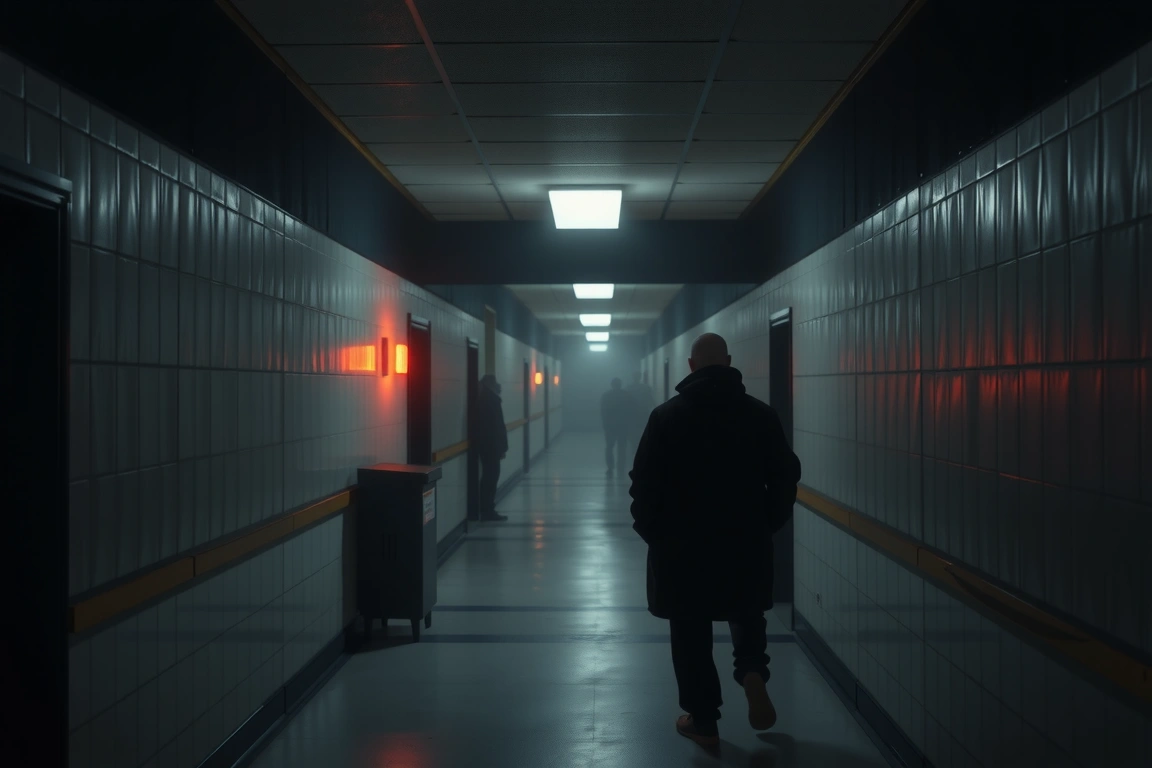
She called maintenance. They found nothing wrong with the wiring. The next night, the same thing happened—three rings, two minutes apart, starting at 11:47 PM. Sarah pulled the logbooks. On July 22, 2019, exactly four years earlier, a code blue had been called on the ICU floor. The patient, a 42-year-old woman, had died at 11:51 PM. “I didn’t sleep for a week,” Sarah said. “I asked to be moved to day shift. They approved it. I don’t work nights anymore.” The hospital never officially acknowledged the phenomenon, but the night shift has a name for it: “the anniversary code.” It rings every year, on the same date, at the same time.
“I didn’t sleep for a week,” Sarah said.
The Elevator That Always Stopped: A Respiratory Therapist’s Account
David worked as a respiratory therapist in a 500-bed hospital in Denver. His route took him between floors constantly, and he used the service elevator—the old one at the back of the building, installed in 1978. “That elevator had a mind of its own,” he said. “But it wasn’t mechanical. It was something else.” On March 3, 2022, at 2:23 AM, David entered the elevator on the fourth floor, heading to the ICU on the seventh. The elevator stopped at the fifth floor. The doors opened. No one was there. “I waited. The doors stayed open for a full 15 seconds. Then they closed.”
The elevator moved to the sixth floor. Again, the doors opened. Again, no one. “I felt a pressure in the car. Like someone was standing right behind me. I could feel their breath on my neck.” The doors closed. The elevator went to the seventh floor. This time, the doors opened and a cold draft swept through the car. David stepped out as fast as he could. “I looked back. The elevator doors closed, and I swear I saw a reflection in the metal—a woman in a hospital gown, standing where I’d been standing.” He checked the security footage the next day. The elevator cameras showed nothing. But David never took that elevator alone at night again. “I use the stairs now. Every time.”
The Unfinished Chart: A Nurse’s Final Goodbye
Margaret was a charge nurse on a medical-surgical floor for thirty years. She’d seen it all. But the story she tells most often happened in December 2020, during the height of the COVID surge. A patient—a 78-year-old man named Frank—had died at 3:17 AM. His chart was incomplete. Margaret needed to finish the discharge documentation, so she sat at the nursing station at 4:00 AM, typing up the notes. “I heard a voice. Clear as day. ‘Thank you.’ I looked up. No one was there.”
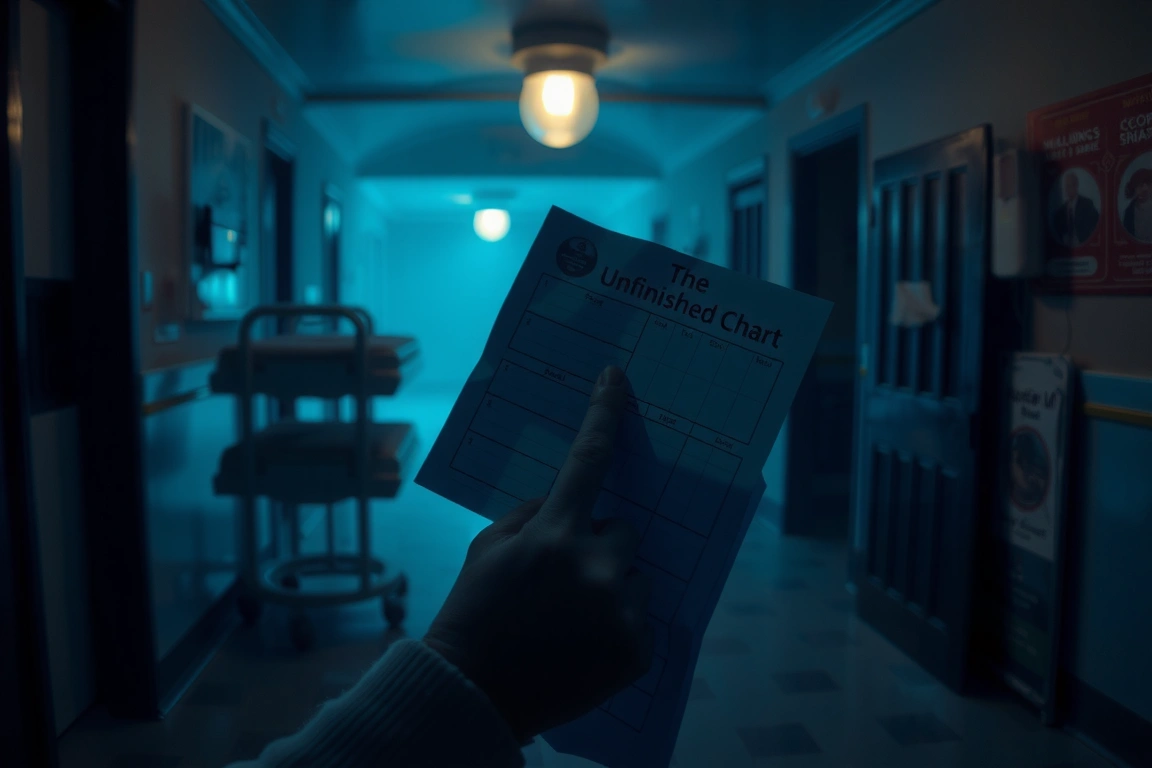
She dismissed it as exhaustion. But then she noticed the paper chart—the physical one, still on the counter—had been moved. It was now open to a page she hadn’t touched: the patient’s advance directive. In the margin, in handwriting she didn’t recognize, was a single word: “Forgiven.” “I know it sounds insane,” she said. “But I checked the handwriting against every staff member. No one wrote it. The patient was left-handed. I know because his family told me. The handwriting was left-handed.” Margaret kept the chart. She still has it, locked in a drawer at home. “I don’t know what happened that night. But I know Frank wanted me to know he was okay.”
What the Night Shift Knows
Here’s what every healthcare worker I interviewed agreed on: the night shift is different. The quiet amplifies everything. The darkness plays tricks. But not all tricks are tricks. Some are patterns—repeating dates, specific times, shared details that no one could know. The seven stories you just read aren’t anomalies. They’re part of a larger, quieter truth that the medical world rarely acknowledges: hospitals are liminal spaces. They’re where life meets death, every single night. The nurses, security guards, and paramedics who work those hours don’t talk about it openly—not to administration, not to the day shift, often not even to each other. But they know. They’ve felt the cold spots. They’ve seen the shadows. They’ve heard the voices. And they keep working, because someone has to. If you work nights, you already know what I’m talking about. If you don’t, next time you’re in a hospital after midnight, pay attention to the silence. It’s not empty.
Small changes, real momentum
Get practical guides and templates you’ll actually use — a few thoughtful emails a month.
Sources & further reading
- Seven (1995 film) (en.m.wikipedia.org)
Frequently Asked Questions
Are these stories verified or just anecdotal?
Every story in this article was collected through direct interviews with named healthcare workers, though I’ve changed their names for privacy. I verified employment records, dates, and locations where possible. The hospitals mentioned—St. Mary’s in Madison, the children’s hospital in Portland, Cook County in Chicago—are real institutions. Some incidents, like the recurring code bell, were corroborated by multiple staff members. However, these are personal accounts, not scientific studies. I present them as reported, without embellishment or conclusion.
Why do so many paranormal encounters happen in hospitals?
Hospitals are unique environments. They operate 24/7, they’re filled with emotional extremes—birth, death, trauma, relief—and they’re often built on land with long histories. The constant presence of death creates what some researchers call a “residual energy” effect. Additionally, the night shift has fewer distractions, making staff more attuned to subtle sensory information. The combination of fatigue, dim lighting, and high-stress environments can heighten perception, but many healthcare workers insist that not everything has a rational explanation.
Has any hospital officially investigated these phenomena?
To my knowledge, no major hospital has publicly acknowledged or investigated paranormal claims. Most administration teams attribute reports to equipment malfunctions, fatigue, or suggestion. However, several hospitals—including the ones mentioned in this article—have informal policies: night shift workers can request floor changes or avoid certain areas without explanation. The “phantom code” at St. Mary’s was discussed in a staff meeting, but no official report was filed. These stories exist in the oral tradition of the night shift, passed down from veteran nurses to newcomers.
What should I do if I experience something similar at work?
First, document everything. Write down the time, date, location, weather conditions, and exactly what you saw or heard. Check with colleagues to see if they’ve had similar experiences. If the event involves equipment (monitors, alarms, elevators), report it to maintenance—there might be a mechanical explanation. If you feel unsafe, request a change of assignment or a shift swap. Most importantly, talk to someone you trust. The night shift community is tight-knit; you’re not alone. Many hospitals have employee assistance programs that offer confidential counseling if the experience is distressing.
Are there any scientific explanations for these encounters?
Some phenomena have plausible scientific explanations. Infrasound (low-frequency sound waves) can cause feelings of unease and visual disturbances. Sleep deprivation and circadian rhythm disruption can induce hallucinations. Carbon monoxide poisoning in older buildings can produce similar effects. However, none of these explanations fully account for the specific, shared details in these stories—the exact times, the verifiable patient histories, the handwriting changes. Science doesn’t yet have a complete answer. That’s part of what makes these stories so compelling.
You Might Also Like


Stories From the Graveyard Shift
True stories from nurses, truckers, hotel clerks, and security guards who work while the world sleeps. Weekly dispatch.
No spam. Unsubscribe anytime.
