
🕐16 min read
In This Article
Night Shift Survival Handbook
Sleep optimization, nutrition tips, and mental health strategies for night shift workers and night owls.
- The Uncanny Baseline: Establishing What’s “Normal”
- The Physical Tells: Environmental Anomalies
- The Sensory & Cognitive Anomalies: The Unseen Pressure
- Electromagnetic Interference: The Ghost in the Machine
- Documentation Protocol: Building Your Case Log
- Rule Out the Mundane: The Investigator’s Checklist
- When to Escalate and What to Say
- Sustaining Your Equilibrium on the Long Watch
- Frequently Asked Questions
Disclosure: This post contains affiliate links. If you click through and make a purchase, we may earn a small commission at no extra cost to you. Thank you for supporting this site!
Has the hair on your arms ever stood up in a chilled corridor at 3:30 AM for no reason? Have you ever logged an equipment fault, knowing in your gut it wasn’t the machine that moved? Working the night shift places you in a different world. It’s quieter. Your senses sharpen. You become an observer in a building’s private life, after the lights go out and the daytime energy dissipates. And sometimes, what you observe doesn’t fit into any employee handbook. This guide is for the security guard in an empty warehouse, the night nurse on a long-term care ward, and the clerk in a historic hotel. It’s a practical primer on documenting the weird, identifying patterns, and learning to differentiate between a faulty boiler and something… else.
The Uncanny Baseline: Establishing What’s “Normal”
Before you can identify the strange, you must intimately know the mundane. This isn’t a casual observation; it’s procedural. In the security field, this is called establishing your “pattern of life.” For the first week on a new post or floor, carry a small notebook. Don’t just note the major noises—log everything. The exact time the ancient HVAC system groans to life (2:17 AM, a metallic shudder lasting 27 seconds). The specific spot where the floorboard creaks under the janitor’s cart (outside room 214, two short groans). The scent of ozone from the printer at the nurse’s station after a long run. Document the temperature fluctuations. Note which corridor feels perpetually drafty and which one is strangely still. This baseline is your scientific method. It turns vague unease into a measurable deviation. A sound at 3:00 AM is just a sound. The same sound at 3:00 AM, when your logs show the building’s machinery has been silent since 1:45 AM, becomes data.
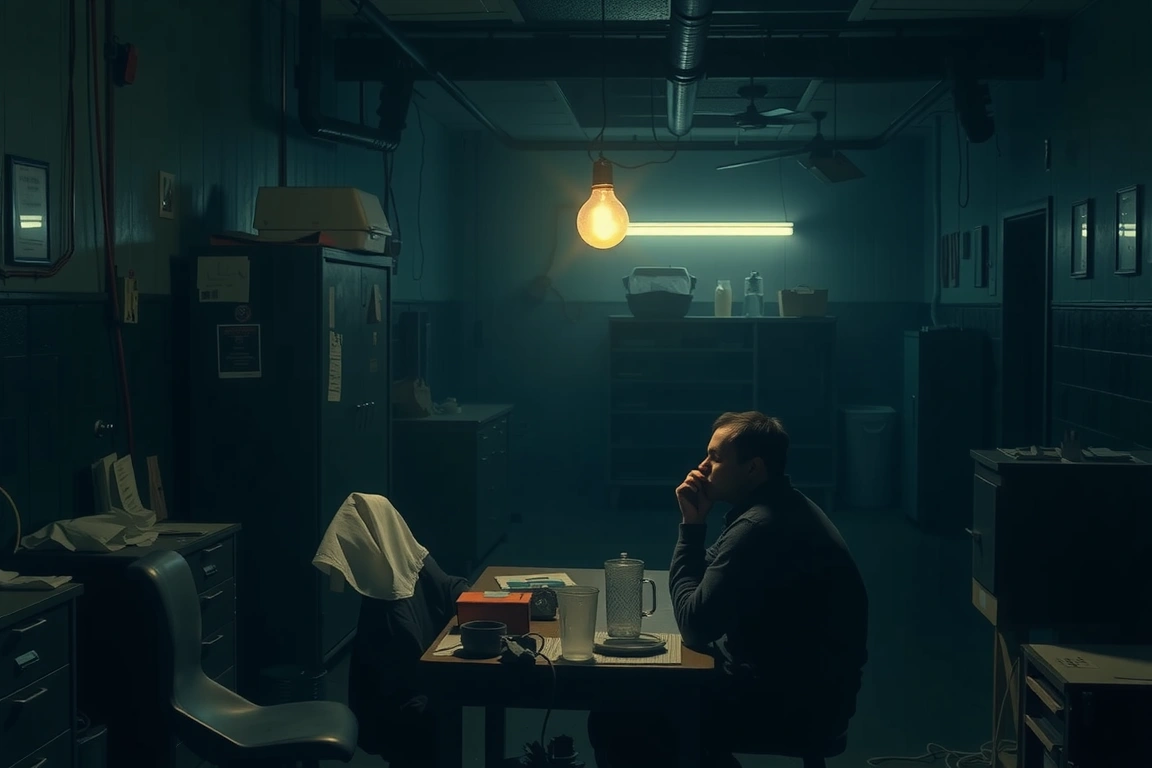
Use technology as your ally. Many night auditors use property management systems like Opera or Maestro. Note any recurring “glitches” with specific rooms. Does room 309’s TV turn itself on every Thursday around midnight? A nurse might note that the call light from room 712 intermittently activates for exactly 11 seconds, despite the patient being sound asleep and the button physically untouched. Is it a wiring fault, or is it a pattern? One documented case from the now-closed Riverview Hospital in Coquitlam, British Columbia, involved nursing staff who, over a period of 18 months, logged 47 separate instances of call bell activations from an unoccupied wing between 4:00 and 4:15 AM. The records provided a timestamped, indisputable record of the anomaly, separating it from rumor.
The Physical Tells: Environmental Anomalies
These are the phenomena that leave a mark on the physical world. They are the most compelling to document because they can be measured, recorded, or witnessed by multiple people. The first and most common is thermographic. A sudden, localized drop in temperature is a classic signature, often reported as moving through a space. You’re not just feeling “chilly.” It’s walking from a 72-degree corridor into a pocket of air that feels 20 degrees colder, a chill that makes your breath fog for a few steps before you’re back in the ambient warmth. A 2018 informal study by the Night Watch Network, a forum for security professionals, collected 122 reports of such incidents. Of those, 89 were accompanied by a distinct, static-like scent—like ozone or burned dust.
Auditory phenomena move beyond unexplained noises. The truly unsettling events have a specific quality. This isn’t a bang that could be a pipe. It’s the clear, unmistakable sound of a chair scraping across the floor in the locked conference room. It’s the murmur of a conversation in an empty break room, where you can almost, but not quite, make out the words. In hotel lore, specific sounds are tied to specific histories. At the 123-year-old Hotel Monte Vista in Flagstaff, Arizona, night staff have consistently reported two distinct sounds for decades: the rhythmic thump of a medicine ball dropped by a long-dead bellhop in the third-floor corridor, and the soft, desperate crying of an infant from a sealed-off room on the second floor. The sounds are recorded in logbooks going back to the 1950s.
Visual events are rarer, but devastatingly clear. These aren’t full-bodied apparitions. They are flickers of movement at the edge of your peripheral vision—a shadow passing an interior window that has no light source behind it. It’s the brief, impossible reflection of someone standing behind you in the dark monitor of a powered-down computer. The key is restraint. Do not chase it. Observe its endpoint. Did the shadow move toward room 5? Did the reflection seem to be looking over your left shoulder? Note the exact time, your location, and the direction of your gaze. This precision is what separates a campfire story from an incident report.
The Sensory & Cognitive Anomalies: The Unseen Pressure
This category is more subjective, yet it’s consistently reported across professions with uncanny similarity. It involves a direct, non-physical intrusion on your senses or mood. The most frequently described sensation is a sudden, oppressive feeling of being watched. It’s not general paranoia. It’s a sharp, directional pressure—the undeniable sense that something is observing you from the end of the dark hallway, from within the supply closet, or from just behind the nurses’ station counter. Truckers pulling over at remote rest stops describe this feeling vividly, often waking from a nap with the certain knowledge that someone is peering into their cab from the passenger-side window, despite the lot being empty.
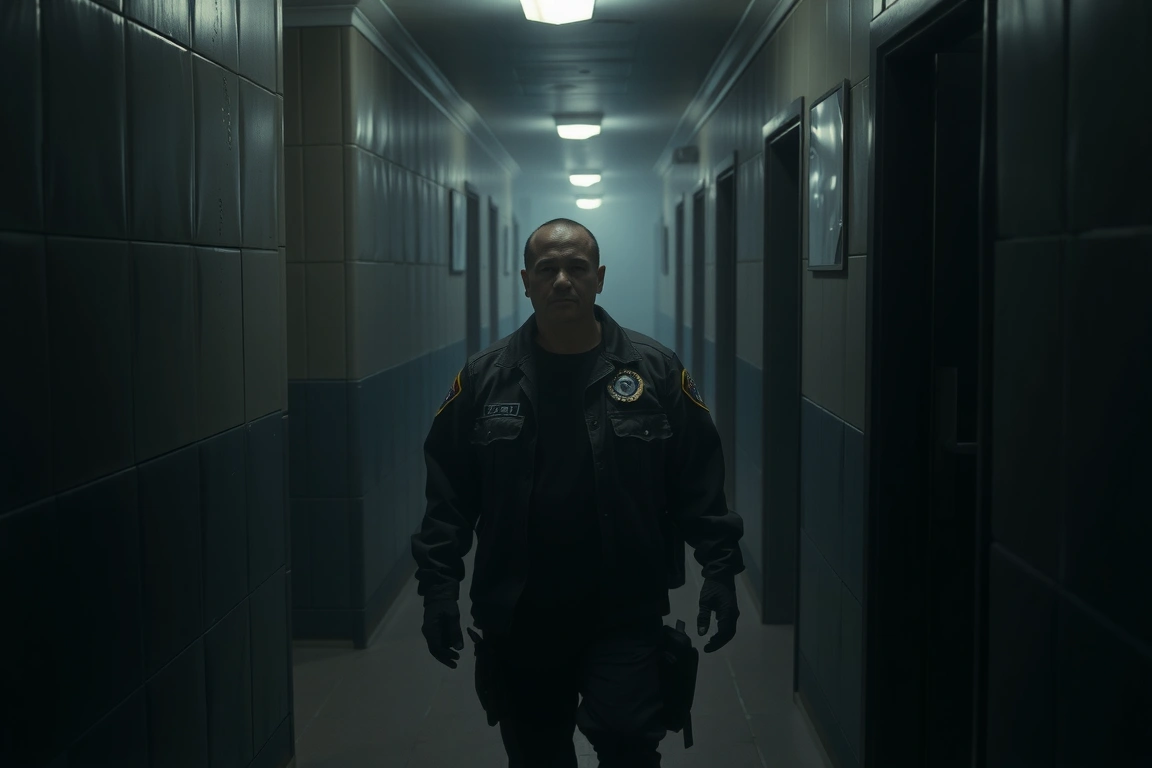
Another common report is the sudden onset of irrational, intense emotion in a specific location. A nurse might feel a wave of profound sorrow while passing a particular, unremarkable stretch of hallway—a sorrow that lifts the moment she steps into the next wing. A security guard might feel a spike of pure, animalistic fear while doing rounds in a normally placid basement archive, a fear that has no correlating sight or sound. The critical point is location specificity. The emotion is tied to the place, not to you. Document where it starts, where it peaks, and where it fades. Does it happen every time you pass that spot, or only under certain conditions, like when you’re alone?
The sense of being touched is perhaps the most visceral. It’s rarely a grab or a push. It’s a light, unmistakable pressure—a hand on your shoulder when no one is there, a tug on the back of your uniform shirt, a distinct breath on the back of your neck. In May 2019, a veteran emergency dispatcher in a midwestern call center posted a detailed account on a first-responder forum. While on a quiet overnight shift, she felt a firm, three-fingered grip on her left forearm for approximately five seconds as she reached for a pen. The pressure was cold enough to raise goosebumps, and it left a faint, temporary reddening of the skin. She was alone in her cubicle bay. These events are personal, intimate, and leave little room for rationalization.
Electromagnetic Interference: The Ghost in the Machine
The modern workplace is a symphony of electronics, and anomalous activity often conducts itself through them. This goes beyond a flickering lightbulb. It’s systematic, intelligent interference with devices that otherwise function perfectly. Two-way radios are a prime vector. Unexplained voice traffic is common—a whisper, a single word, or a burst of static that sounds like a distant conversation cutting in. The key identifier is that it occurs on a closed, secure channel. In one documented 2006 case at a decommissioned textile mill in Massachusetts, overnight security teams using Motorola CP200 radios would receive a faint, repeating transmission of a woman humming a tune every night between 1:00 and 1:10 AM. The transmission was heard simultaneously by all four handhelds on the property, but did not register on the base station log.
Battery drain is another telltale sign. It’s not just a weak battery. It’s the sudden, complete death of a fresh, high-quality battery in a piece of equipment. A common report from paranormal investigators is the failure of brand-new Duracell or Energizer lithium batteries in digital voice recorders or EMF meters when brought into a specific room, while the same equipment functions normally elsewhere. For the night worker, this might manifest as the brand-new flashlight dying the moment you turn down a certain hall, or your fully charged phone dropping from 90% to 1% while you’re making notes in a particular office.
Finally, pay attention to automated systems. Motion sensors that trigger in a sequence showing movement through a series of empty rooms. Elevators that park on a closed floor without a call. Printers that spit out reams of blank paper or, in famously creepy cases, historical documents not stored in their memory. These events leave digital footprints. A motion sensor log showing activation in Rooms 201, 203, and 205 at 4:03 AM is a concrete piece of evidence—it shows a progression, a path. It’s data that exists independently of your perception.
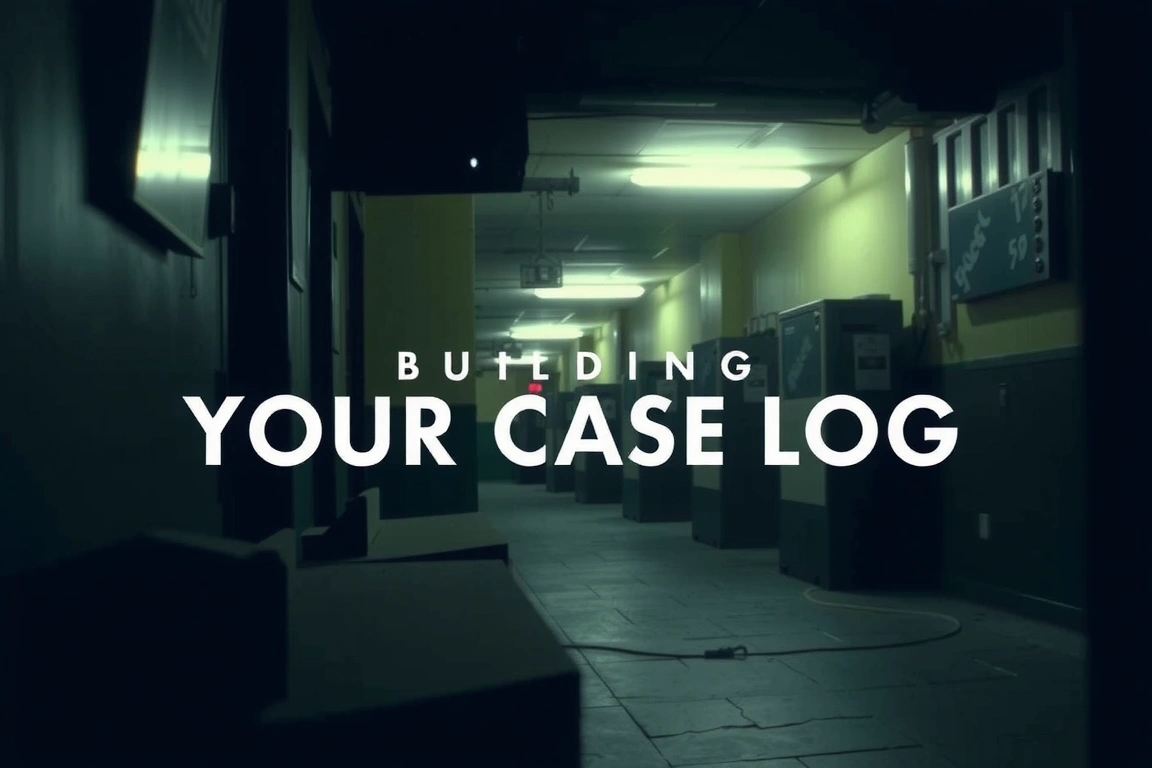
Documentation Protocol: Building Your Case Log
When something happens, your memory is your worst enemy. Adrenaline distorts time and details. You need a system. Start with a dedicated logbook. A simple, hardbound composition notebook is ideal because it provides a sequential, tamper-evident record. Date every entry. Use military time (0300, not 3 AM) for clarity. Your entry must be a clinical narrative. Instead of “I got spooked in the east wing,” write: “0337 – Completing round in East Wing, Level 2. Stopped to check fire door E-207. Heard three distinct, slow knocks from other side of door. Sound was wooden, solid. No visual under door. Checked exterior camera feed (Cam 14) for that doorway; no one present on feed for 15-minute window. Sound not repeated. Ambient temp normal.”
Corroborate with technology if possible. The camera on your smartphone is a tool. If you feel a temperature drop, take a photo. Some apps, like “Thermal Camera HD,” can use your phone’s existing sensors to create a crude but illustrative heat map, showing cooler spots as blues and purples. A simple audio recorder app can run in your pocket. If you hear unexplained sounds, verbalize your observations in real-time: “It’s 0422, I am at the north stairwell door, the knocking is starting again, it sounds like it’s coming from two floors down…” This contemporaneous audio log is powerful.
Create a map. On a printed floor plan, mark locations and types of incidents with different colored dots or symbols. A red dot for auditory events, a blue dot for cold spots, a green dot for visual shadows. Over time, this visual representation can reveal clusters and patterns that are invisible in your written log. You might discover that all the cold spots line up along the path of a demolished interior wall, or that the auditory phenomena cluster around what was once a central chimney. This transforms a collection of weird nights into actionable intelligence about your workspace.
Rule Out the Mundane: The Investigator’s Checklist
Before you file an incident under “unexplained,” you must aggressively rule out the ordinary. This is the most critical step. It preserves your credibility and often solves a genuine, if bizarre, physical problem. Run through this checklist for every event.
- Infrasound: Frequencies below 20 Hz are inaudible but can cause feelings of dread, visual distortions, and even the sensation of being watched. Sources include industrial fans, distant traffic, or specific wind conditions against a building. Could a newly started exhaust fan or the wind from a storm be vibrating at this frequency?
- Carbon Monoxide: A slow, low-level leak is a silent saboteur. It causes headaches, nausea, auditory and visual hallucinations, and profound paranoia. The famous “Ghost of 8H” case at a fire station was solved by discovering a faulty furnace. Do you have a CO detector? Is it certified and within its expiry date?
- Pareidolia: This is our brain’s tendency to see faces and figures in random patterns (the “man in the moon”). In low light, a coat on a hook, a mop in a bucket, or shadows from a desk lamp can easily become a lurking figure. Change your viewing angle. Turn on more lights. Does the shape resolve into something ordinary?
- Settling and Plumbing: Old buildings talk. Pipes expanding and contracting can sound like footsteps or knocks. Ductwork cooling can create groans and shudders. Cross-reference the sound with your baseline log. Is this the normal 2:17 AM groan, or is it different in timbre, duration, or location?
- Sleep Deprivation & Shift Work Disorder: Your mind is not at its peak. Micro-sleeps, hypnagogic hallucinations (the state between wakefulness and sleep), and heightened suggestibility are real risks. Are you hydrated? Have you eaten? When was your last proper sleep cycle? Be ruthlessly honest with yourself about your own physical state.
When to Escalate and What to Say
So you’ve documented multiple, corroborated events. You’ve ruled out infrasound, CO, and plumbing. The pattern on your map is undeniable. What now? Deciding to report this requires careful framing. Your goal is not to convince your supervisor of the paranormal. Your goal is to report a persistent, unexplained environmental anomaly that is affecting your work environment and potentially the safety or comfort of others. Schedule a private meeting, not a hallway conversation. Present the facts, not the interpretation.
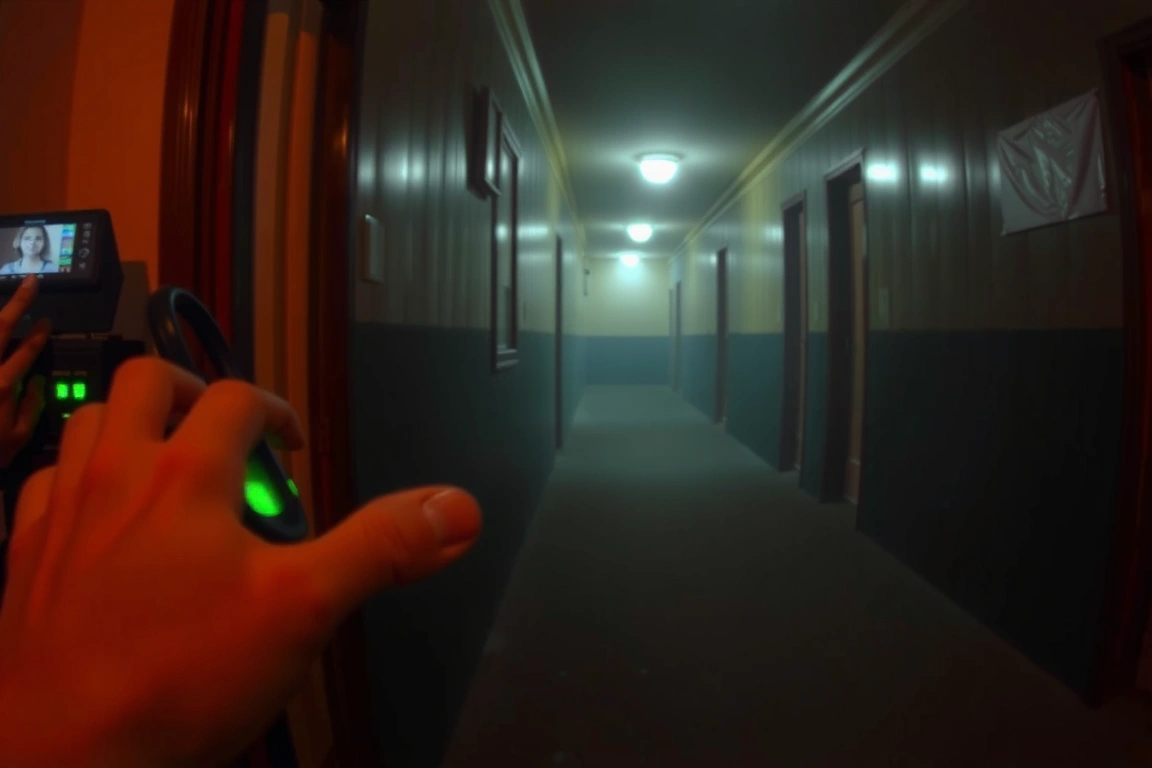
Say: “I need to report recurring anomalies during the overnight shift in the East Wing. I’ve documented 14 separate incidents over the last two months, primarily between 3 AM and 4 AM. They include sudden temperature drops of 15-20 degrees, motion sensor activations in locked rooms, and unexplained battery drain in equipment. I’ve attached my log and a map showing the locations. I’ve checked for drafts and HVAC issues with maintenance, and they found no cause. I’m bringing this to you because it’s a consistent pattern, and I want to make sure there isn’t an underlying electrical or structural issue we’re missing.” This approach focuses on observables, safety, and documentation. It invites a practical investigation, not a theological debate.
Know your boundaries. If the activity escalates to anything that feels threatening, makes physical contact, or causes genuine distress, your duty is to your own safety. Document the incident, and if necessary, remove yourself from the location and contact your supervisor immediately. No job is worth enduring genuine terror. In most cases, simply having a detailed, professional log will either lead to the discovery of a mundane problem or will cause management to quietly assign that patrol route or duty to a team, rather than a lone worker. You’ve done your job: you’ve identified, documented, and reported an anomaly. The resolution is now an operational matter.
Sustaining Your Equilibrium on the Long Watch
Working in an environment where the uncanny is a possibility requires mental maintenance. You must cultivate a stance of detached curiosity, not fearful anticipation. Fear is a fuel; it will burn you out and cloud your judgment. After a shift with a notable event, practice a personal ritual of decompression. For some, it’s listening to upbeat music on the drive home. For others, it’s a long, hot shower—literally washing off the atmosphere of the night. Change out of your uniform immediately. This physical act helps separate your professional self from your personal self.
Be mindful of what you consume. If you’re spending your off-hours binging paranormal investigation shows or reading horror fiction, you’re priming your brain to see threats in every shadow. Balance it with grounded, sensory activities: cooking a meal, working with your hands, spending time outdoors in the sunlight. Talk about it sparingly, and only with people who won’t sensationalize it. The goal is to prevent the experiences from colonizing your entire life. You are an observer on the night shift, not a protagonist in a ghost story. Maintaining that distinction is what allows you to do the job, log the data, and go home to a restful sleep.
The night shift grants you access to a world few see. By learning to recognize the signs—the specific cold spot, the intelligent interference, the patterned sound—you move from being a passive witness to an active chronicler. The three most important things you can do are this: First, build a meticulous baseline log of your environment’s normal rhythms. Second, document every anomaly with clinical precision, using time, location, and sensory detail. Third, and most crucially, exhaust every possible mundane explanation before considering anything else. This methodical approach won’t necessarily explain what you experience, but it will grant you clarity and control. It turns fear into fascination, and a weird night into a piece of a much larger, older puzzle.
Frequently Asked Questions
What’s the most common sign of paranormal activity reported by night workers?
Overwhelmingly, the most commonly reported sign is auditory. This isn’t random bangs, but specific, intelligible sounds that have no physical source. For hotel clerks, it’s the sound of luggage wheels in an empty hall or a child’s laughter from a vacant room. For security guards, it’s the clear sound of footsteps keeping pace with their own on the other side of a wall, or a door handle jiggling. The critical detail is repetition and clarity. A one-time crash is a pipe. The same three knocks at the same time every night, originating from the same sealed-off attic access panel, is a pattern that demands documentation.
Should I use a spirit box or EMF meter on my shift?
It’s generally not recommended, especially if you’re working solo. These devices are designed to be provocative—to generate responses. A spirit box scans radio frequencies rapidly, creating white noise from which voices may seem to form. This process, known as auditory pareidolia, can easily trick your brain. Introducing this chaotic stimulus into an already heightened environment can increase your anxiety and skew your perception
Related from our network
- 8 Signs Your House Might Be Spiritually Active (witchcraftforbeginners)
- How to Interpret Animal Omens in Daily Life: A Practical Five-Step Framework (animalsouldecoder)
- Hearing Whispers While Alone: Mystical Interpretations Explained (witchcraftforbeginners)
You Might Also Like

Stories From the Graveyard Shift
True stories from nurses, truckers, hotel clerks, and security guards who work while the world sleeps. Weekly dispatch.
No spam. Unsubscribe anytime.
